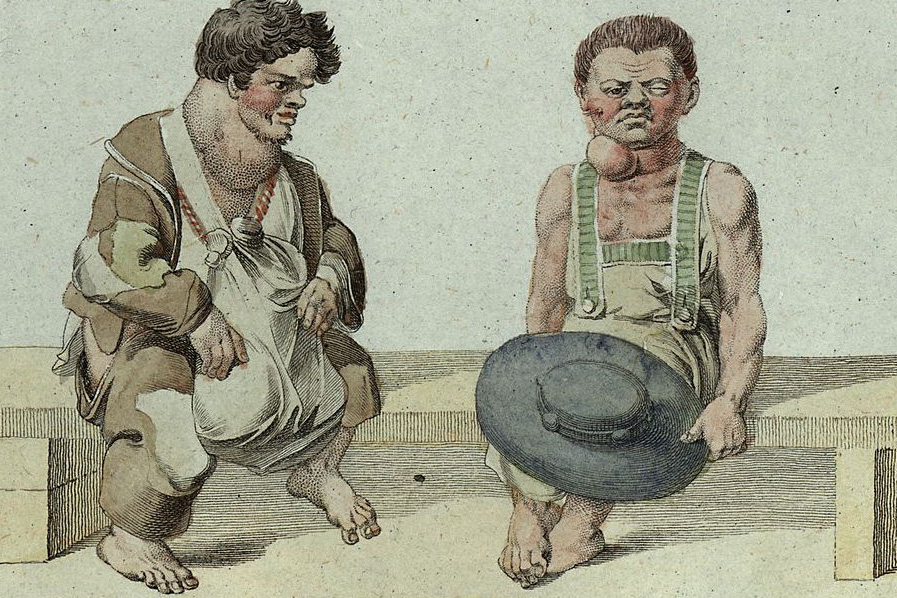
A public health breakthrough born in early 20th-century Swiss villages has eradicated one of Europe's most devastating historical diseases, ending centuries of suffering in Alpine communities.
For generations, remote valleys in Switzerland were plagued by endemic goiter and cretinism, a severe condition causing physical deformities and profound intellectual disability. Historical accounts from the 19th century describe populations where up to 90% had swollen thyroid glands (goiters) and up to 2% suffered from cretinism. The cause remained a medical mystery for centuries, with incorrect theories ranging from poor hygiene and inbreeding to the quality of mountain water. The real culprit was a critical absence: a dietary deficiency of iodine, a nutrient essential for thyroid function and fetal brain development.
The pivotal discovery came from physician Heinrich Hunziker, who in 1914 correctly identified that goiter was caused by the thyroid gland being "starved" of iodine. He understood it was not a drug but a vital dietary component needed in tiny, regular doses. Building on this, Valais doctor Otto Bayard conducted a daring field experiment in 1918. He distributed salt he had mixed with sodium iodide to families in the village of Grächen. Within months, the goiters receded with no signs of poisoning. This success led to a larger trial curing over 1,000 people of hyperthyroidism symptoms.
The final, crucial step was public adoption. Surgeon Hans Eggenberger launched an intensive public education campaign, using slide shows in cinemas to visually demonstrate the cure's benefits and combat public skepticism. His advocacy helped secure a national policy. In 1922, after reviewing the evidence, the Swiss Goitre Commission issued an official recommendation for all cantons to introduce iodized salt. This made Switzerland the first country to systematically combat the deficiency through salt fortification, a public health strategy now used globally.
This tripartite effort—Hunziker's theory, Bayard's practical proof, and Eggenberger's public persuasion—virtually eliminated the ancient "Scourge of the Alps" within a generation. Switzerland's pioneering model demonstrated that a simple, inexpensive nutritional intervention could prevent immense human suffering, laying the groundwork for worldwide iodine deficiency disorder prevention programs that protect millions today.