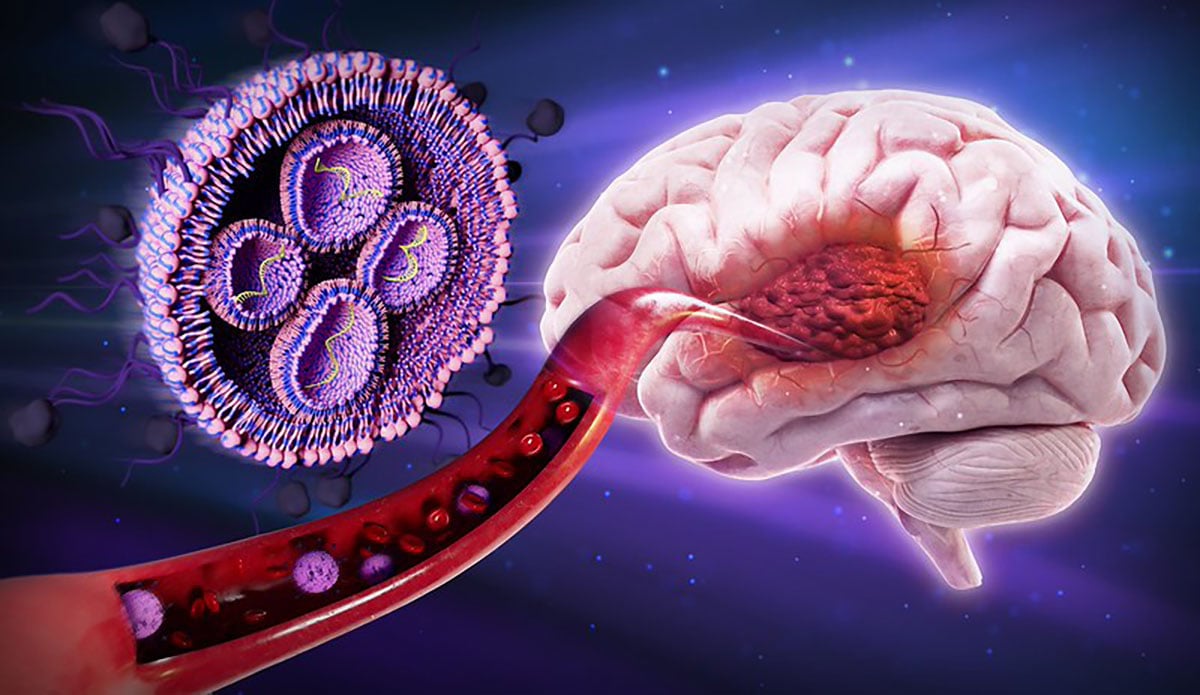
A new nanoparticle treatment that uses sugar to sneak past the brain’s defenses has extended survival in mice with glioblastoma, the deadliest form of brain cancer. The approach, developed by researchers at Oregon State University, tackles two long standing obstacles in brain cancer therapy: getting drugs past the blood-brain barrier and making sure they reach tumor cells while sparing healthy tissue.
Glioblastoma has a five-year survival rate below 5 percent, and current treatments are limited because the blood-brain barrier blocks most drugs from entering the brain. The experimental therapy uses lipid nanoparticles, tiny fat-based carriers, loaded with messenger RNA that instructs cells to produce a tumor-suppressing protein called PTEN. The key innovation is coating the nanoparticles with mannose, a sugar closely related to glucose. Cells lining brain blood vessels have a transporter called GLUT1 that normally moves glucose into the central nervous system, but it also recognizes mannose. By densely packing the nanoparticle surface with mannose, the researchers enabled the particles to compete with blood glucose for access to the transporter. The team improved surface coverage sixfold by chemically linking mannose to cholesterol, a major structural component of the nanoparticles.
Once across the blood-brain barrier, the particles naturally concentrate in tumor tissue because glioblastoma cells express GLUT1 at three times the levels of normal brain tissue. The mRNA cargo then directs cells to make PTEN, a protein often lost in glioblastoma that helps restore control over cell growth. In mice, the treatment increased median survival by 50 percent compared with untreated animals, and repeated dosing led to tumor shrinkage without measurable organ toxicity. The cargo was protected during delivery by a cationic cholesterol derivative that safeguarded the genetic material.
What This Means for Patients
The findings are preclinical, meaning they come from animal research and have not yet been tested in humans. Many promising cancer therapies in mice do not ultimately work the same way in people. Still, the approach targets two major barriers that have long limited glioblastoma treatment: reaching the brain and concentrating therapy inside the tumor. In the United States, glioblastoma occurs at a rate of 3.19 cases per 100,000 people, with a median age at diagnosis of 64. More than 95 percent of patients live less than five years after diagnosis.
The research team is now working to advance the nanoparticle platform toward human trials. If successful, the sugar-coated delivery system could offer a new way to treat not only glioblastoma but other brain cancers that have been difficult to reach. “Restoring PTEN expression in tumor cells reinstates growth control,” said researcher Olena Taratula. The study was published in the Journal of Controlled Release and supported by the National Cancer Institute and other federal grants.