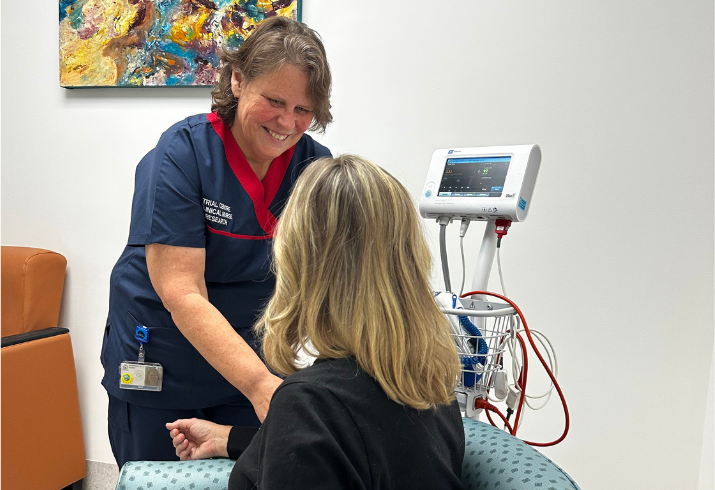
Patients undergoing chemotherapy in regional Western Australia are now part of a groundbreaking study that could change how cancer treatment side effects are managed. For the first time, a commercially sponsored clinical trial is underway outside the state’s major cities, bringing cutting edge research directly to rural and remote communities.
The trial, known as the YAAD clinical trial, is a Phase 2, double-blind, placebo-controlled study evaluating a new medicine designed to treat chemotherapy-induced nausea and vomiting. Researchers from the WA Country Health Service Clinical Trial Centre are leading the work in collaboration with clinicians in the Goldfields and Great Southern regions. Participants are randomly assigned into two groups: one receives the experimental medicine, while the other receives a placebo. Both groups continue to receive their planned chemotherapy treatment and standard-of-care antiemetic medication.
To support the study, dedicated in-house laboratory spaces have been established at the Albany and Esperance Health Campuses. These labs allow local teams to collect and process samples on site, while regional clinicians administer the medication and monitor participant health. The trial is being conducted in partnership with international oncology research company Eli Lilly and Company, marking a significant step for regional Australia’s role in medical innovation.
For patients in underserved areas, this trial represents more than a scientific milestone. It means access to potentially better supportive care without the need to travel hundreds of kilometres to a metropolitan hospital. If the new medicine proves effective, it could offer a much-needed option for the many cancer patients who struggle with nausea and vomiting despite existing treatments.
The results of the YAAD trial are expected in the coming years. Researchers hope the study will pave the way for more commercial trials in regional centres, expanding access to novel therapies and reinforcing the message that world-class medical research can happen anywhere.