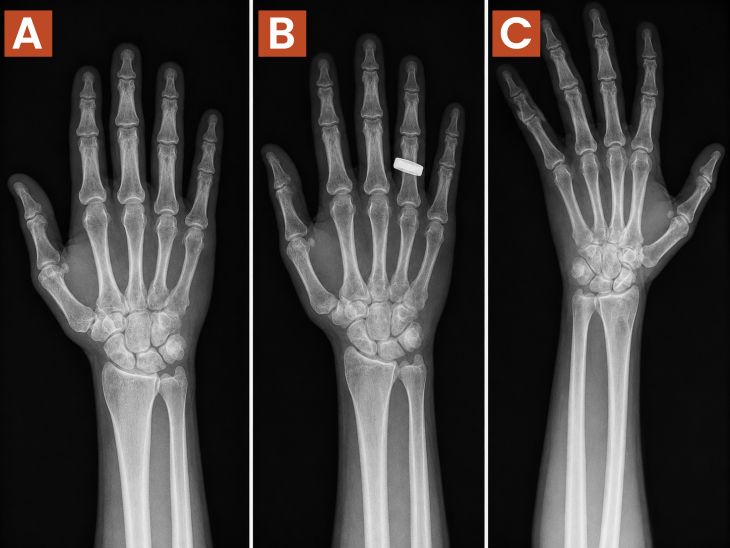
In a milestone for space medicine, scientists have captured the first ever X-ray images of the human body in orbit using a small portable machine. The breakthrough, published on July 14 in the journal Radiology, proves that astronauts can diagnose injuries like broken bones while aboard spacecraft. The same technology could also bring affordable medical imaging to remote communities on Earth where hospitals are hard to reach.
Until now, astronauts have relied primarily on ultrasound to check for injuries in space. But ultrasound cannot always see fractures as clearly as an X-ray can. Traditional X-ray machines have never flown because they are too large, heavy, and power hungry. As space agencies plan longer missions to the Moon and Mars, the risk of bone injuries rises, creating an urgent need for a lightweight, reliable alternative. Portable X-ray devices are already used on Earth for their small size and low power needs, and some can run on solar energy. Dr. Sheyna Gifford, an aerospace medicine expert at Mayo Clinic, wanted to test whether one could work in zero gravity.
The first test came during a parabolic flight in 2022, where brief weightlessness allowed researchers to X-ray a hand. The real proof arrived during the Fram2 mission, a private SpaceX flight launched on March 31, 2025. Four first time astronauts, each with just four hours of training, operated the portable X-ray machine in orbit. Over 3.5 days, they successfully captured digital X-rays of a smartwatch, a hand, the chest, the abdomen, and the pelvis. The images appeared instantly on digital screens with no film development needed. After the mission, three independent medical specialists compared the space images with X rays taken on Earth before launch. The Earth images were slightly sharper, but the experts determined the space X rays were clear enough to diagnose fractures. The machine also returned to Earth with only minor cosmetic damage, proving its durability for space travel.
Dual Purpose for Space and Remote Earth Clinics
The portable X-ray machine is not just for medical emergencies. Scientists say it could also be used to inspect spacecraft hardware for cracks or damage, and to check food and supplies for foreign objects. These capabilities could make it an essential tool for future exploration. Dr. Gifford hopes future versions will become even smaller, stronger, and easier to use. “It is my hope that we can further reduce the size of portable imaging systems and improve their ruggedness and usability,” she said.
The biggest impact may be felt on Earth. Because the machine is lightweight, runs on little power, and produces digital images viewable on tablets or smartphones, it could bring quality imaging to remote clinics and villages where hospitals are far away. Patients could receive quicker diagnoses without traveling long distances. What started as a solution for astronauts orbiting Earth may soon help millions of people who simply need a closer look at what is broken.