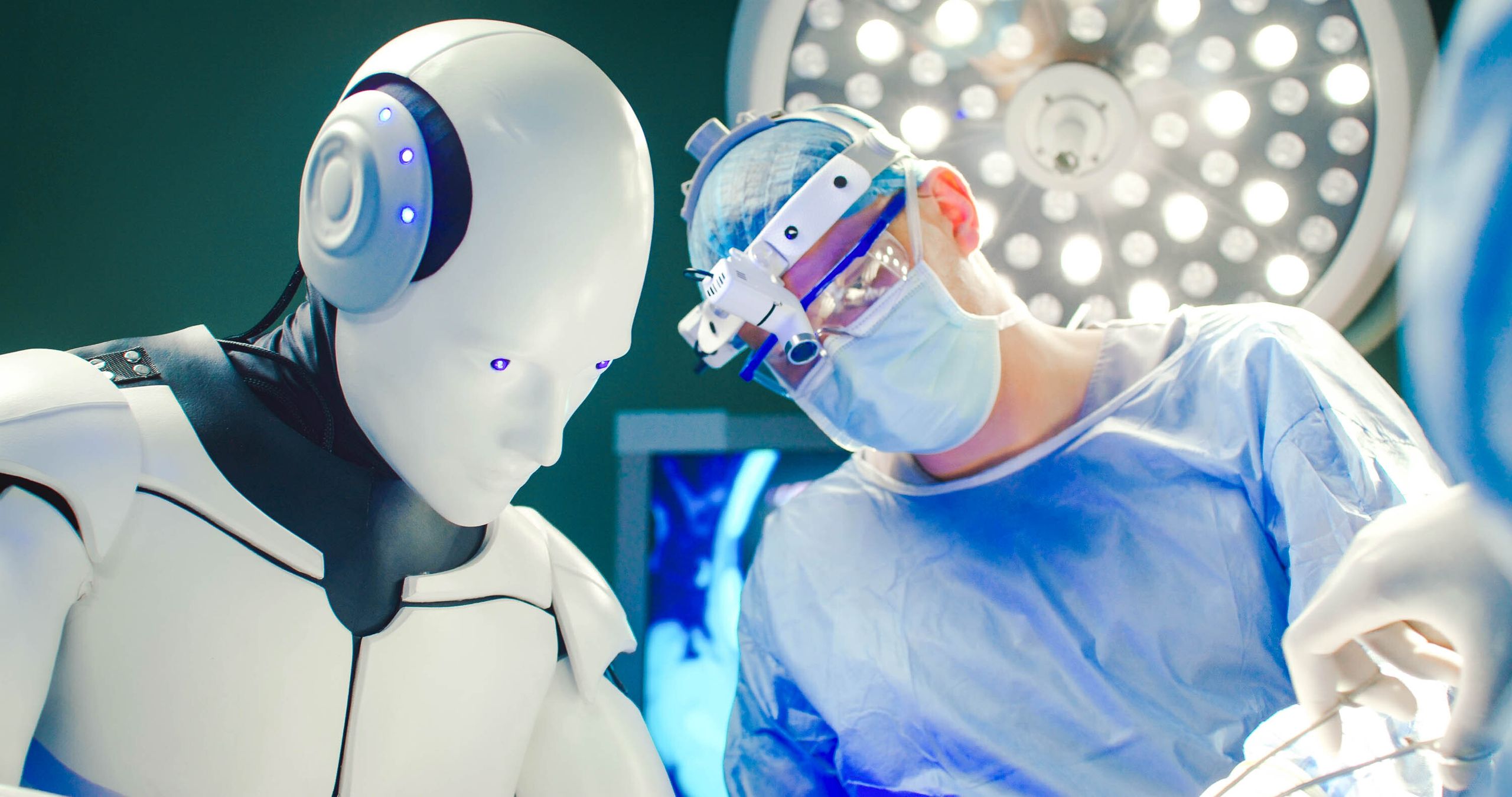
In a world first, two humanoid robots have successfully assisted in live surgeries, a breakthrough that researchers say could help address critical shortages of surgeons in the United States and around the globe. The procedures, performed by a team from the University of California San Diego, mark a significant step toward integrating affordable, versatile robots into operating rooms.
One surgery involved a human surgeon working alongside a humanoid robot to remove a gallbladder. In a separate procedure, two humanoid robots collaborated with each other to perform a laparoscopic gallbladder removal. Both operations were conducted as proof-of-concept experiments on non-primate mammals and were described in a research paper published in Nature. The robots required several recalibrations during the procedures, which extended the surgery times, but the operations were completed successfully.
Michael Yip, a co-author of the study and a faculty member in UC San Diego’s Department of Electrical and Computer Engineering, said the results show that humanoid robots have a viable future in surgery. “Remotely operated and autonomous humanoid robots have real potential for amplifying access to critical surgeries to which patients would otherwise not have access,” he stated. The researchers highlighted several advantages of humanoid robots, including their relatively low production cost, ease of deployment in remote locations, and versatility across different tasks.
Addressing a Growing Surgeon Shortage
The breakthrough comes at a time when the United States faces a significant shortage of surgeons. A 2025 study by the American College of Surgeons, using data from the Association of American Medical Colleges, found that 21 states have fewer general surgeons than needed. The same data projects a shortage of 13,500 to 86,000 physicians nationwide by 2036. Researchers believe humanoid robots could eventually help fill these gaps, working alongside human surgeons to expand access to care.
This achievement builds on decades of progress in surgical robotics. The first surgical robot, Anthrobot, assisted in an arthroscopic knee surgery in 1983. Two years later, the PUMA 560 system helped with a CT-guided brain biopsy. In 1992, ROBODOC became the first robotic system to operate on a human, preparing a femur for a prosthetic hip replacement. Now, with humanoid robots successfully collaborating in the operating room, the field is poised for further advances.
Looking ahead, researchers plan to refine the technology to eliminate the recalibration issues that slowed the recent procedures. With continued development in artificial intelligence, humanoid robots may one day act more independently during surgeries, offering a hopeful solution to the growing demand for surgical care worldwide.