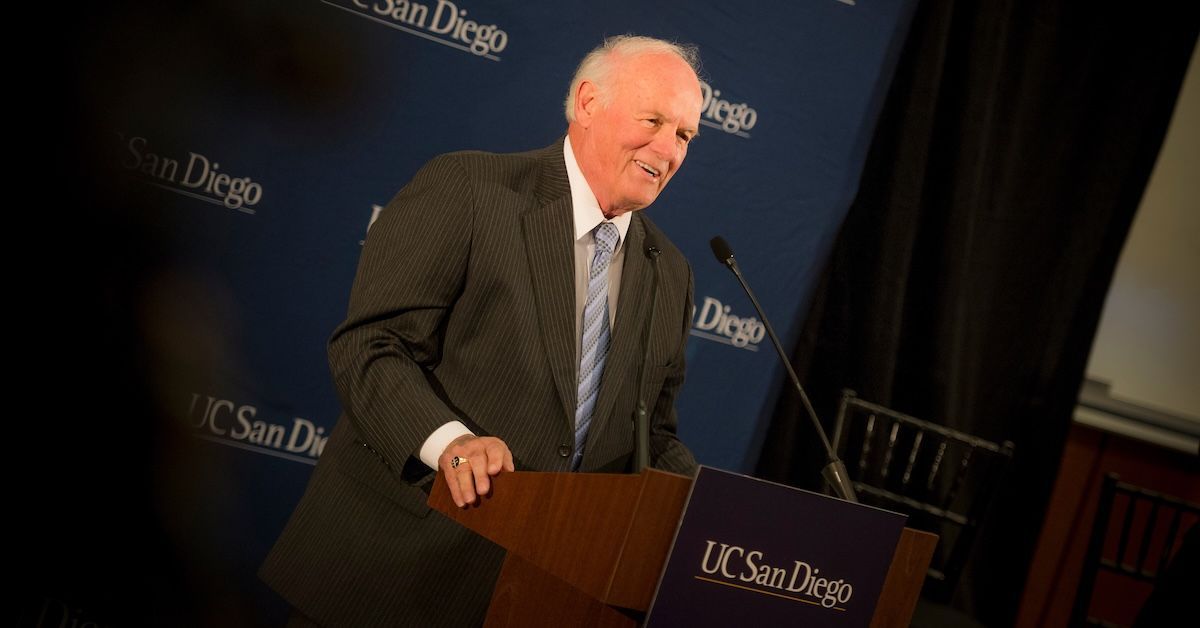
T. Denny Sanford, a philanthropist whose generosity reshaped the landscape of regenerative medicine and medical education, died on July 18 at the age of 90. His more than $355 million in gifts to the University of California San Diego helped launch pioneering stem cell research on Earth and in space, and created the first scientific institute dedicated to studying empathy and compassion in health care.
Sanford’s largest single gift, a $150 million commitment in 2022, established the UC San Diego Sanford Stem Cell Institute. The institute now operates six centers and a brain tumor and neuro-restoration program, with over 1,126 patients enrolled in clinical trials targeting degenerative diseases. Its researchers have also launched 19 research missions to the International Space Station as of June 2026, using microgravity to study aging, cancer and human disease. These space-based studies have informed clinical trials for severe autism and myeloid malignancies, and may guide new approaches to treatment-resistant breast cancer.
A decade earlier, a $100 million gift in 2013 created the Sanford Stem Cell Clinical Center, accelerating the translation of stem cell discoveries into drugs and therapies. Sanford also funded the T. Denny Sanford Institute for Empathy and Compassion with another $100 million in 2019. That institute now spans six centers researching the neurological basis of empathy, developing medical education programs, and addressing clinician burnout. Its curricula have been adopted by medical schools across the United States and internationally.
A Vision That Extended Beyond Science
Sanford’s philanthropy also supported The Preuss School UC San Diego, which helps students from historically underrepresented backgrounds become first-generation college graduates, as well as research at Scripps Institution of Oceanography and the Epstein Family Alzheimer’s Research Collaboration. He was awarded the Chancellor’s Medal in 2014 and received the university’s Lifetime Legacy Award in 2023, an honor reserved for exceptional visionaries whose contributions have made an enduring impact.
“Denny Sanford understood that transformative advances in human health begin with the courage to invest in bold ideas and the people who pursue them,” said John M. Carethers, vice chancellor for Health Sciences. Leaders at the stem cell institute pledged to carry forward his goal of transforming the best science into the best medicine. Sanford’s legacy, they said, will live on in the researchers he empowered and the patients whose lives will be changed for generations to come.