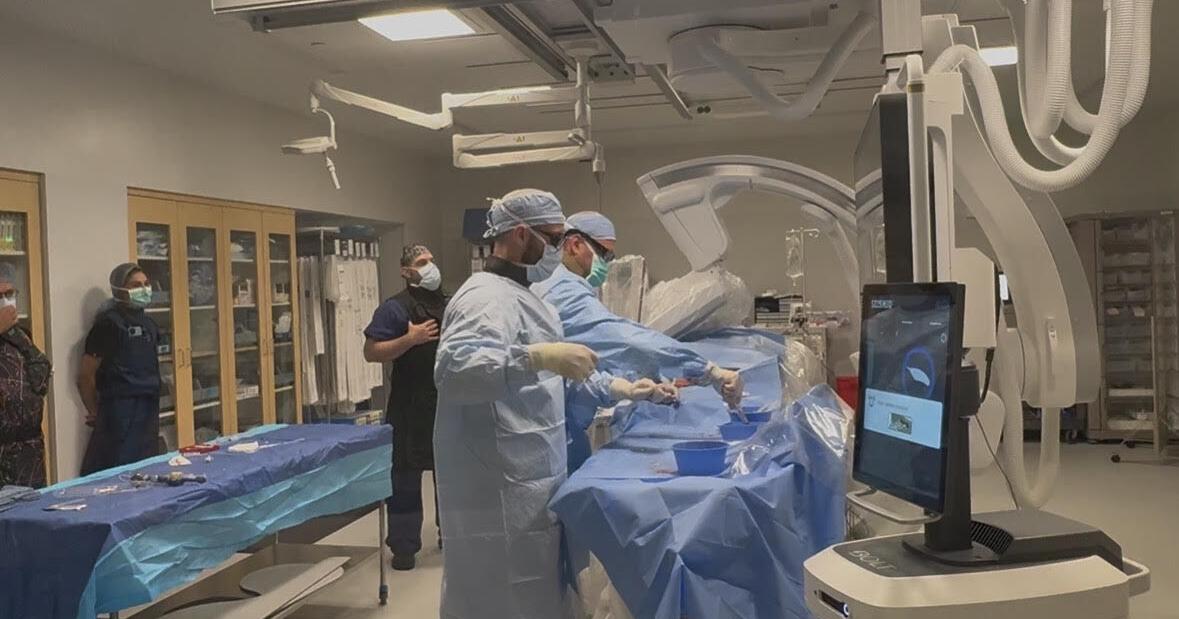
A medical first in Western Pennsylvania has given an Erie patient a new chance at healing, thanks to a device that uses sound waves to break up rock-hard calcium blocking leg arteries. Doctors at LECOM Health completed the procedure using the SeisMIQ device, a tool that sends targeted energy through the artery wall to fracture calcified plaque. For patients with severe peripheral arterial disease, the approach could mean avoiding amputation and its devastating long term outcomes.
The patient arrived with a blockage in the femoral artery so calcified it was nearly stone-like. Blood flow to the foot was critically low, and wounds had already formed on the great toe. During the procedure, which took less than an hour, doctors guided the SeisMIQ device into the artery. The device emits energy that creates tiny cracks in the calcium, much like shocking a boulder before striking it with a sledgehammer. This allows a balloon to then expand the artery safely and effectively. Dr. Matthew Becker, an interventional cardiologist, described the mechanism as fracturing the calcium so that when the balloon comes in, the whole blockage crumbles.
Peripheral arterial disease affects millions, but severe calcium buildup in the leg arteries has historically carried high risks. Dr. Becker noted that over half of people who undergo an amputation die within two years, a prognosis worse than many cancers. The new approach avoids major surgery, reducing risk and speeding recovery. With blood flow restored, doctors expect the patient’s foot wounds to heal quickly. The device has completed rigorous study to prove its safety and effectiveness, leading to its introduction in the region.
What This Means for Patients
For patients with severely calcified blockages in the legs, the SeisMIQ device offers a minimally invasive option that could prevent limb loss. The procedure’s short duration and reduced recovery time make it an attractive alternative to traditional bypass surgery. Dr. Becker emphasized that the goal is to give patients the absolute best care without the need for major operations. As more centers adopt the technology, the hope is that fewer patients will face amputation and its grim survival statistics.
Looking ahead, doctors plan to expand use of the device to other patients with complex calcium disease. The successful outcome in this first case signals a promising shift in how vascular specialists treat some of the most challenging blockages. For the Erie patient, the road to recovery has just begun, but the restoration of blood flow marks a critical turning point. Continued adoption of this technology could change the standard of care for peripheral arterial disease, offering a lifeline to those who previously had few options.