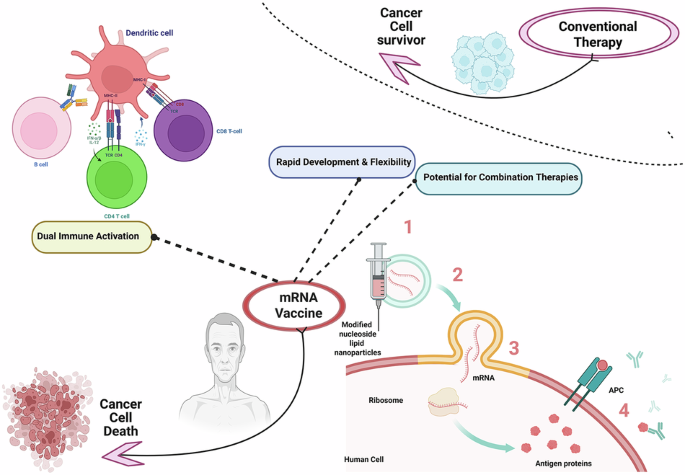
For men facing a prostate cancer diagnosis, the treatment landscape is on the cusp of a profound transformation, fueled by a technology that became a household name during the pandemic. Messenger RNA, or mRNA, vaccines, celebrated for their role in combating COVID-19, are now being ingeniously repurposed in the fight against cancer. This innovative approach represents a fundamental shift from directly attacking tumors to educating a patient's own immune system. By delivering precise genetic blueprints, these vaccines instruct the body to recognize and destroy cancer cells based on their unique molecular signatures. This strategy brings with it a wave of optimism, offering the potential for highly targeted treatments that can be developed rapidly and boast favorable safety profiles, marking a new chapter in personalized oncology.
The journey from concept to clinic, however, navigates a complex biological terrain. Prostate tumors are notorious for creating a deeply immunosuppressive microenvironment, a fortress of cells and signals that actively disables the body's immune fighters. Early clinical trials with mRNA vaccines, such as the CV9104 candidate, have successfully demonstrated that these treatments can provoke a potent immune response against the cancer. Yet, this promising activation can be muted by the tumor's defenses, leading to mixed clinical outcomes. This challenge does not dim the hope but rather sharpens the focus of research, highlighting a critical insight. The key to success may not lie in the vaccine alone, but in its strategic combination with other therapies designed to dismantle the tumor's barriers.
Consequently, the most exciting frontier in this field involves intelligent combination strategies. Scientists are actively exploring partnerships between mRNA vaccines and existing immunotherapies known as checkpoint inhibitors, which release the brakes on the immune system. The goal is a powerful one-two punch. First, the vaccine trains a specialized army of T-cells to seek out the cancer. Then, the companion therapy empowers those cells to storm the tumor's fortress and complete their mission. Furthermore, cutting-edge advancements in delivery, such as next-generation lipid nanoparticles, and artificial intelligence-driven antigen selection are continually refining these vaccines, making them more potent and precise than ever before.
This convergence of technologies signals more than just an incremental step. It represents a paradigm shift with the potential to redefine care across the spectrum of prostate cancer, from early-stage interventions to the most challenging metastatic cases. The integration of molecular biology, immunology, and clinical oncology is paving a clear path forward. While hurdles remain, the relentless pace of innovation offers tangible hope. The lessons learned from each trial are building a comprehensive framework for turning mRNA vaccines into a durable and precise solution, ultimately aiming to transform prostate cancer from a deadly threat into a manageable condition for patients worldwide.