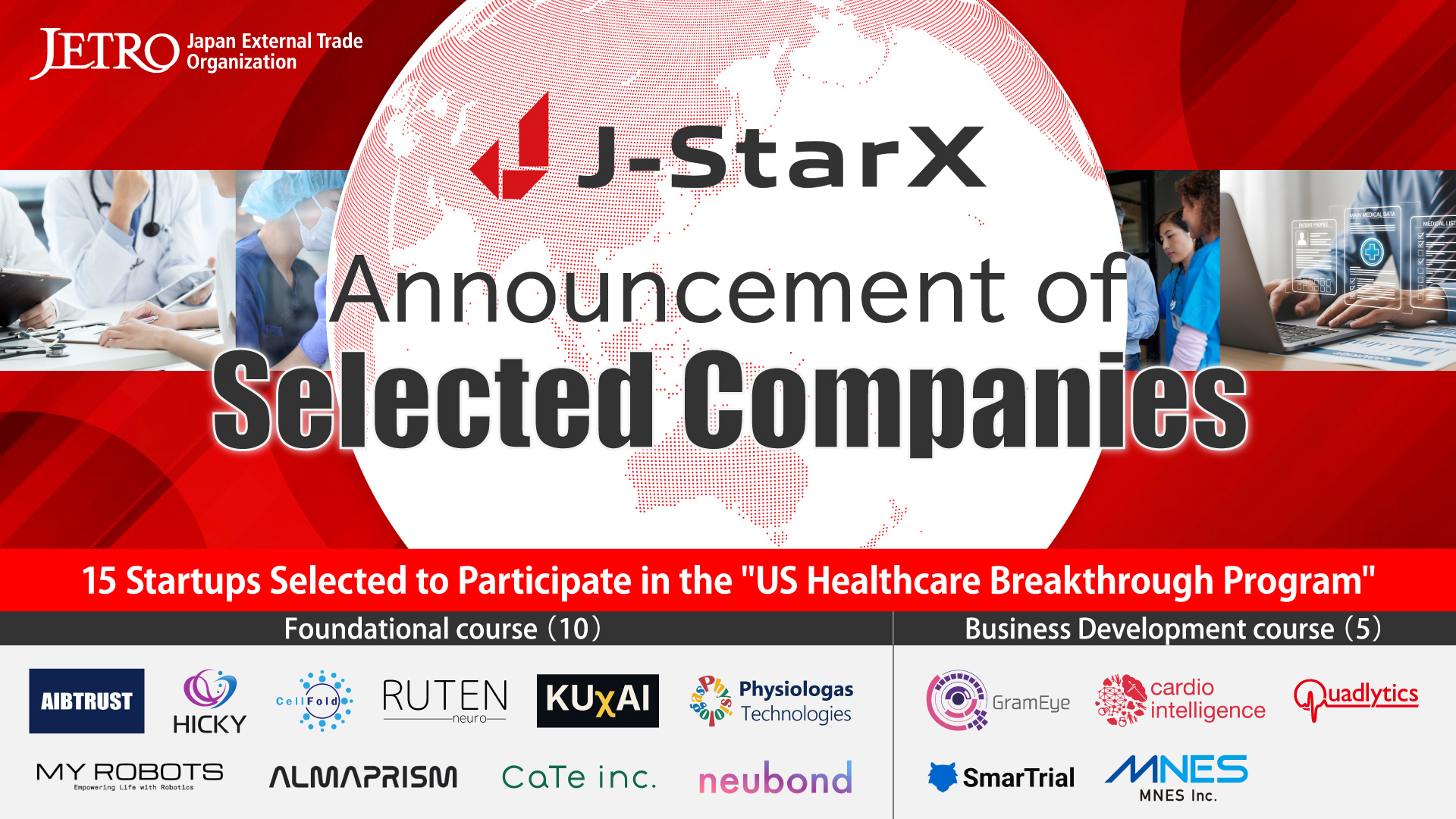
Fifteen Japanese healthcare startups have been chosen to participate in a trans-Pacific accelerator program designed to help them break into the United States market, Mayo Clinic Platform and the Japan External Trade Organization announced this week. The selected companies, working in artificial intelligence, medical devices, and digital health, will receive tailored support ranging from regulatory guidance to investor connections.
The cohort is split across two tracks within the J-StarX US Healthcare Breakthrough program. Ten companies were selected for the foundation course, which focuses on international expansion fundamentals such as understanding region-specific regulatory requirements, developing market-entry strategies, and generating the clinical and commercial evidence needed for overseas growth. These startups span fields including medical AI, rehabilitation, cardiovascular care, neurotechnology, and home healthcare.
The remaining five companies were chosen for a newly launched business development course, designed for startups that are closer to market readiness. Participants will receive hands-on help from experts in regulatory pathways, reimbursement strategies, business development, and investor engagement. Each company will also receive a customized roadmap aimed at creating initial market traction in the U.S.
The program, now in its third year, is a collaboration between JETRO, Mayo Clinic Platform Accelerate, and Mayo Clinic Berg Innovation Exchange, with support from Japan’s Ministry of Economy, Trade and Industry. Kicker Ventures, a U.S.-based venture capital firm, also participates. Jamie Sundsbak, director of the Accelerate program, said the initiative helps health technology startups focus on validation and clinical readiness of responsible AI-driven solutions.
Building on Early Success
The 2026 cohort marks an evolution of the program, which launched in 2024 as an accelerator for digital health startups seeking U.S. entry. Previously, the program offered a single foundation course. The addition of the business development course reflects a growing need for more targeted support as Japanese startups move beyond initial planning and toward actual market penetration.
Akira Kawachi, director of the Startup Support Division at JETRO, said the initiative aims to accelerate the global growth of Japanese healthcare startups, helping them enter the U.S. market and develop into globally competitive companies. The program is part of a broader Japanese government effort to boost startup overseas expansion under its five-year development plan.
For the selected companies, the next several months will involve close collaboration with Mayo Clinic experts and U.S. partners. The goal is not just to enter the market, but to build lasting clinical and commercial relationships. Organizers say the program’s dual structure, from foundational knowledge to hands-on business development, is designed to shepherd startups through every stage of the journey, from first concept to first U.S. customer.
As the cohort begins its work, the hope is that these 15 companies will serve as a bridge between Japan’s innovative healthcare sector and the world’s largest healthcare market, bringing new tools for diagnosis, treatment, and patient care to American clinics and homes.