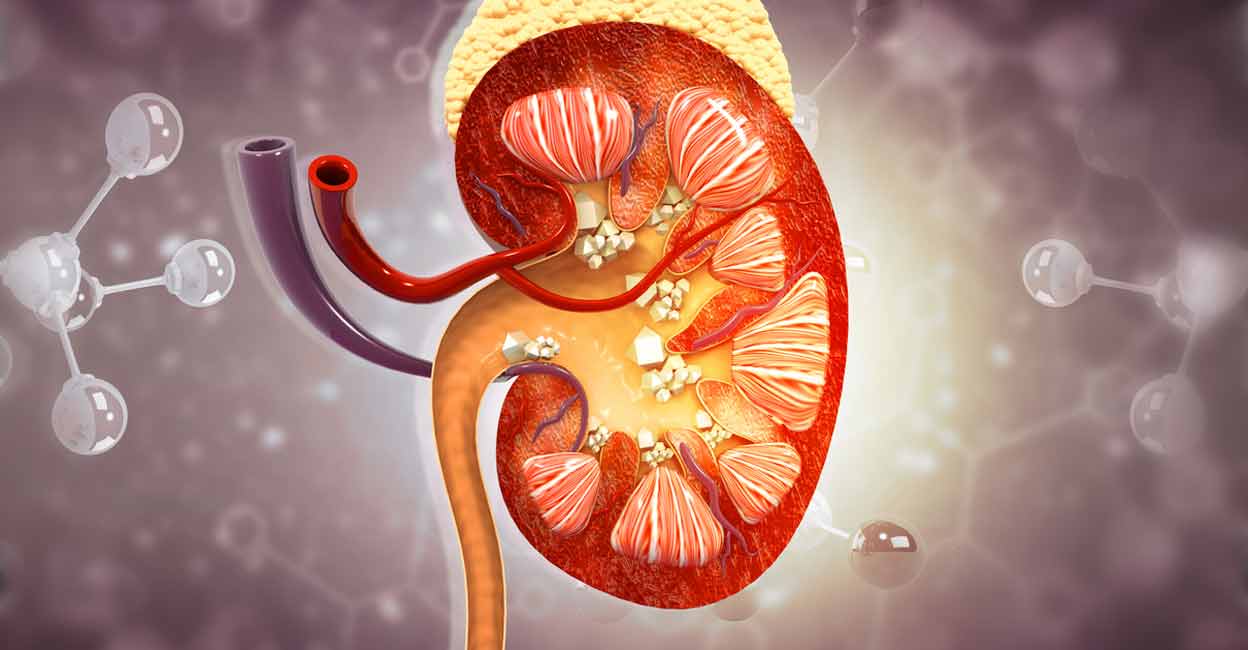
A landmark study has revealed that common kidney stones are not inert mineral deposits but can contain living bacterial communities, a discovery that fundamentally alters the understanding of how these painful stones form and could lead to revolutionary new treatments.
Researchers at the University of California made the unexpected finding after analyzing calcium oxalate stones, the most prevalent type, with advanced electron microscopy and fluorescent staining. They discovered these stones harbored live bacteria and their protective biofilms, effectively making the stones a microbial habitat. This challenges the long-held belief that stones form solely through the passive crystallization of concentrated minerals in urine.
The study explains that bacteria, despite struggling to survive in calcium-rich urine, employ a survival mechanism that directly contributes to stone growth. They release extracellular DNA, which acts like a sponge to trap calcium from the urine. The accumulated calcium then crystallizes around the DNA, gradually building the stone larger. In essence, the bacteria use their own DNA to construct a protective "fort" of calcium. This process may also help explain the clinical link between recurrent urinary tract infections and kidney stone formation.
The implications for patient care are significant. This discovery shifts the focus from viewing stones solely as a chemical problem to understanding them as a potential biofilm-related issue. It opens the door for scientists to develop modern treatment methods that specifically target the bacteria and biofilms hiding within calcium oxalate stones. The goal is to create non-surgical interventions, such as specialized medications or disruptions of biofilm formation, to prevent stones from recurring.
Moving forward, the scientific community aims to identify the specific bacterial species involved and to research compounds that can penetrate stones to disrupt these microbial communities. This hopeful outlook points toward a future where the risk of recurrent kidney stones, which affect approximately one in 11 people, could be managed more effectively with targeted therapies, reducing the need for invasive surgical procedures.