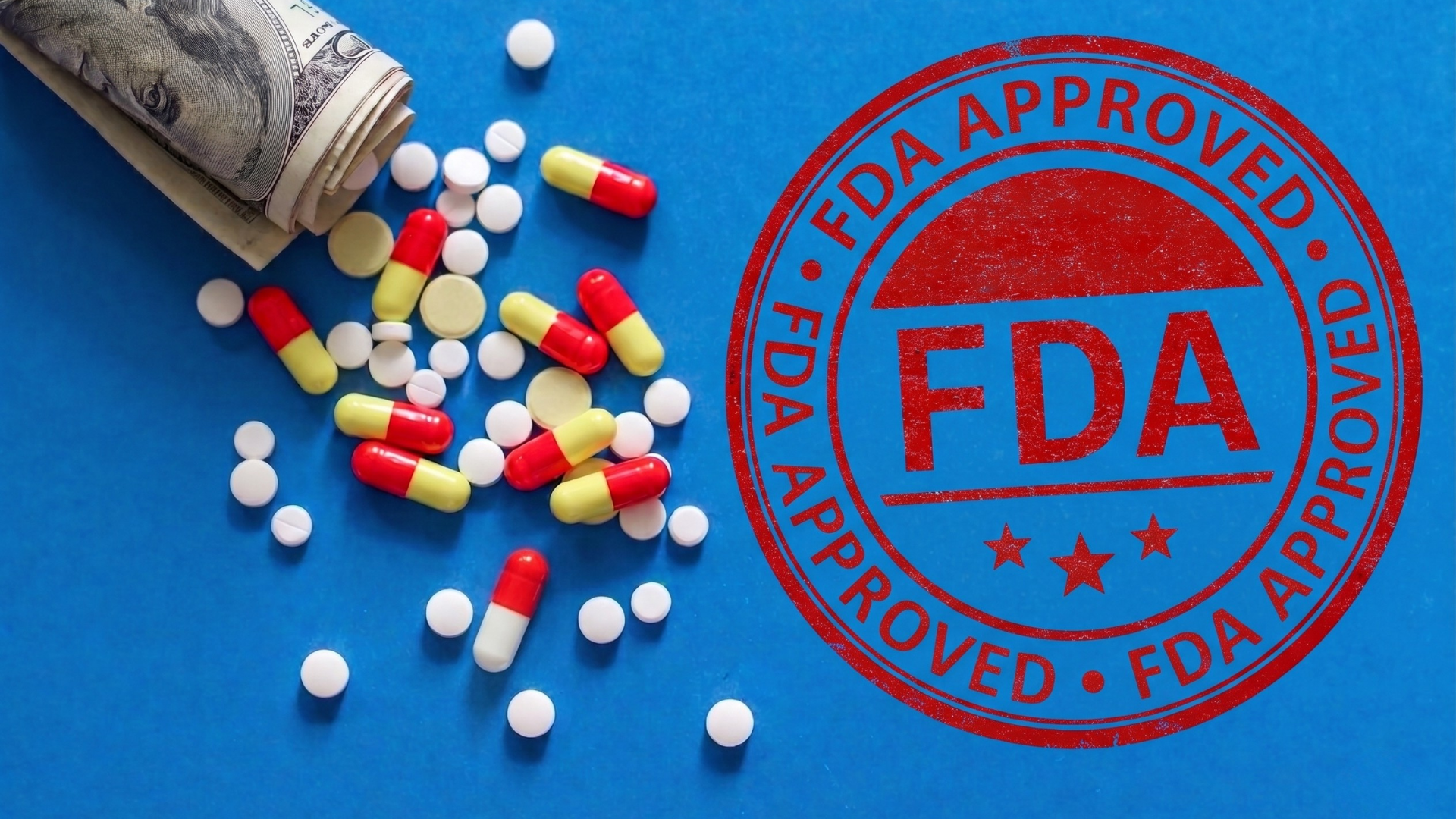
The U.S. Food and Drug Administration has approved five entirely new types of medicines in the first five months of 2026, matching a full year’s average for first in class drugs before the halfway point. These approvals span obesity, genetic hearing loss, breast cancer, hypertension, and blood cancer. Each represents a breakthrough in mechanism not an incremental improvement on existing treatments.
On April 1, the FDA approved Foundayo (orforglipron), the first oral small molecule GLP-1 receptor agonist for obesity that does not require fasting or water restrictions. Unlike injectable GLP-1 drugs, this once daily pill can be taken any time. In the Phase 3 ATTAIN-1 trial involving 3,127 adults without diabetes, the highest dose produced significantly greater weight loss than placebo over 72 weeks. Analysts project annual sales of $14.79 billion by 2030, reflecting the vast unmet need among the estimated 1 billion people living with obesity globally.
On April 23, the FDA granted accelerated approval to Otarmeni (lunsotogene parvec-cwha), the first gene therapy for genetic hearing loss and the first therapy to restore a neurosensory function to normal levels. Developed by Regeneron, it treats a form of deafness caused by mutations in the OTOF gene. In the Phase 1/2 CHORD trial, 80% of evaluable participants aged 10 months to 16 years achieved meaningful hearing improvement at 24 weeks. Among those followed to 48 weeks, 42% reached normal hearing thresholds. The therapy was approved in just 61 days, one of the fastest reviews in FDA history.
On May 1, the FDA approved Veppanu (vepdegestrant), the world’s first approved PROTAC drug, for ER positive, HER2 negative advanced breast cancer with ESR1 mutations. PROTACs work by tagging disease proteins for destruction rather than simply blocking them. In the Phase 3 VERITAC-2 trial, vepdegestrant reduced the risk of disease progression or death by 43% compared to standard therapy fulvestrant in the ESR1 mutant subgroup. This platform opens the door to targeting proteins previously considered undruggable.
On May 18, the FDA approved Baxfendy (baxdrostat), the first aldosterone synthase inhibitor for hypertension in decades. It directly reduces production of the hormone aldosterone, which drives sodium retention and high blood pressure. In the Phase 3 BaxHTN trial, the 2 mg dose lowered systolic blood pressure by 15.7 mmHg from baseline in patients already on two or more medications, with nearly 40% achieving target blood pressure below 130 mmHg versus 18.7% on placebo. On May 13, the FDA also granted accelerated approval to Beqalzi (sonrotoclax) for relapsed or refractory mantle cell lymphoma, another first in its class.
These five approvals signal a shift toward more ambitious drug design. With new oral options for obesity, gene therapies for sensory loss, and entirely new platforms like PROTACs entering clinical use, patients can expect more treatments that address root causes rather than symptoms. Continued trials will confirm long term benefits, but the first half of 2026 has already redefined what is possible in medicine.