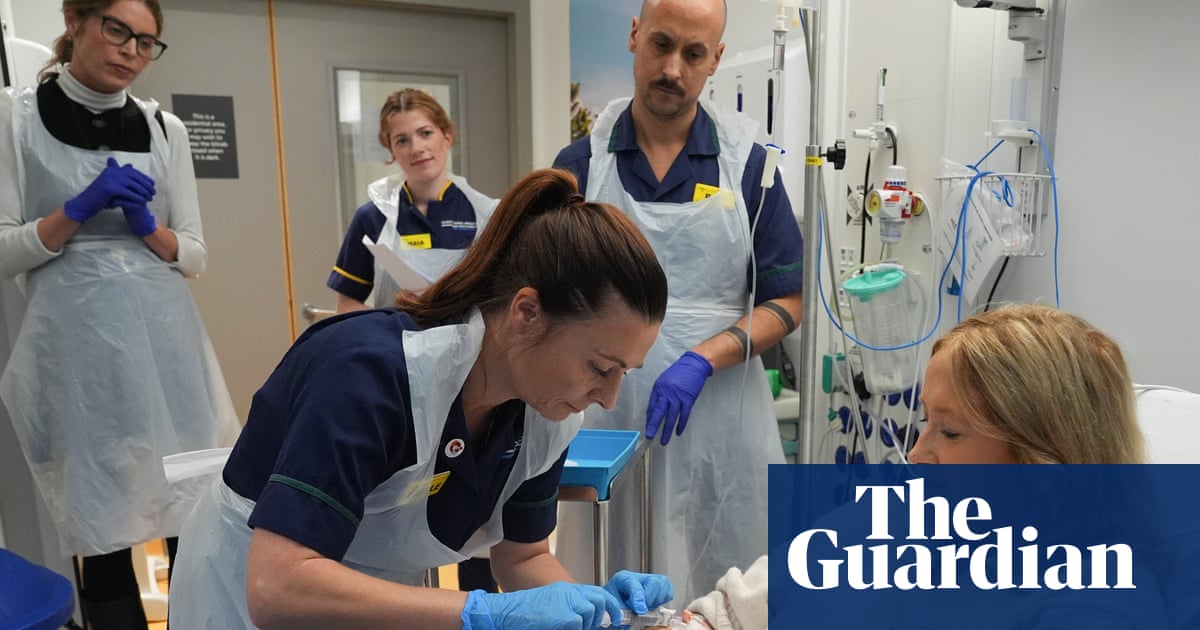
Five patients with severe lupus are now in remission after receiving a single treatment that genetically modifies their own immune cells, marking what doctors describe as a potential breakthrough in the search for a cure for the chronic autoimmune disease. The patients, treated in an NHS trial in London, had all failed to respond to existing therapies and saw their symptoms disappear within months.
The therapy is known as CAR T-cell therapy, a technique already used to revolutionize cancer treatment. It involves removing a type of white blood cell called T lymphocytes from the patient, then engineering them in a lab to recognize and attack disease-causing cells. These modified cells are infused back into the patient, effectively resetting the immune system. In this trial, led by University College London Hospitals and University College London, nine patients with severe lupus were recruited. Most had lupus nephritis, a serious kidney complication. Six received a lower dose of CAR T-cells and three a higher dose. Of those on the lower dose, followed for an average of 11 months, all five went into remission within just a few months. The three on the higher dose have been followed for only three months so far, but doctors believe they too may achieve remission.
Lupus is a chronic autoimmune disease in which the immune system attacks healthy tissues, causing widespread inflammation and damage to organs such as the kidneys, lungs and heart. Symptoms can include joint pain, skin problems, fatigue and organ inflammation. About 5 million people worldwide are thought to have lupus, which mostly affects women. Tests on the trial patients showed rapid improvements in disease markers, including stabilization or improvement in kidney function that had been damaged by lupus. Unlike current treatments that require lifelong medication, CAR T-cell therapy is given as a single infusion.
A Patient’s Story: From Severe Illness to a New Life
One of the patients, Katie Tinkler, 52, from Guildford, Surrey, had lived with severe lupus since age 20. The disease forced her to give up her job as a fitness instructor and caused swollen, painful joints, kidney damage, lung and heart disease, and a tendency to develop blood clots. She also experienced sepsis and multi-organ failure, requiring a coma in intensive care. Now in remission, Tinkler said her life is “unrecognizable.” She has skied for the first time in a decade and was able to dance at her daughter’s wedding. “Thinking about how life was beforehand and how it is now, it’s like night and day,” she said. “My whole system was affected by lupus and my joints were so painful that sometimes I couldn’t walk. I couldn’t use my hands to pick up mugs. But now I don’t have these problems any more. It’s miraculous.”
Professor Karl Peggs, director of UCLH’s biomedical research centre, called the findings “truly groundbreaking” and said they offer fresh hope to people living with lupus. He stressed that larger studies are needed to confirm the results. “If these results are confirmed in larger studies, the prospect of a cure for lupus may no longer be out of reach,” he said. The trial continues to follow the remaining patients, and researchers are hopeful that CAR T-cell therapy could one day free patients from the cycle of chronic autoimmune disease without the need for lifelong medication.