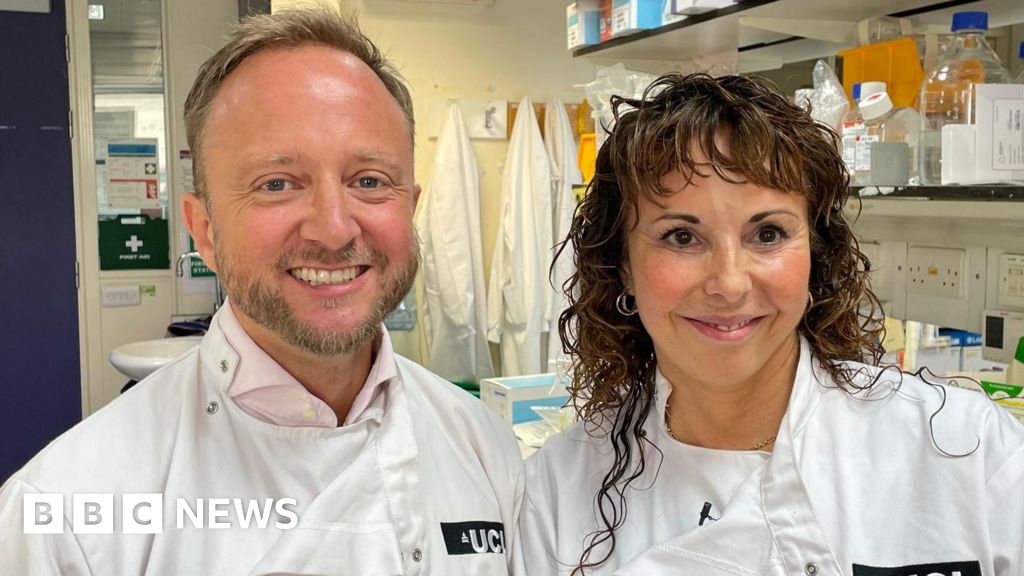
For the first time, a groundbreaking medical treatment has successfully slowed the progression of Huntington's disease, a hereditary neurological condition long considered one of the most devastating diagnoses a family can face. The results, described by the research team as "spectacular," show a remarkable 75% slowing of clinical progression in patients. This means the decline typically expected over one year could now take four years following treatment. Professor Sarah Tabrizi, director of the University College London Huntington's Disease Centre, expressed profound emotion, stating the team never in their "wildest dreams" expected such a magnitude of effect. This breakthrough offers the tangible hope of decades of additional good quality life for those living with the disease.
The human impact of this advance is already becoming clear within the trial. While patients remain anonymous, one individual who was medically retired has been able to return to work. Others are still walking despite earlier expectations they would need a wheelchair. For people like Jack May-Davis, a 30-year-old who inherited the faulty gene and watched his father decline and pass away from Huntington's, the news is transformative. Having always believed he was destined for the same fate, Jack now describes feeling "overwhelmed" by an "absolutely incredible" breakthrough that allows him to look toward a future that seems "a little bit brighter." This sentiment captures a new wave of optimism washing over families who have lived under the shadow of this disease for generations.
The therapy itself represents a marvel of modern genetic medicine, designed as a one-time treatment to permanently reduce levels of a toxic protein in the brain. It involves a delicate 12 to 18 hour surgical procedure where a specially engineered virus is infused deep into specific brain regions. Once delivered, this microscopic postman instructs the patient's own neurons to produce a therapy that intercepts and disables the genetic instructions for creating the mutant protein that kills brain cells. Data confirms the treatment is not only slowing symptoms but is actively preserving neurons, with key markers of brain cell death now lower than at the trial's start. Consultant neurologist Professor Ed Wild, who was moved to tears by the findings, called the result "breathtaking" and one many feared they would never see.
While the path to widespread availability involves regulatory approvals and complex discussions about the anticipated high cost and the intensive surgery required, the scientific community views this as a pivotal beginning. The company behind the therapy aims to apply for a license in the United States by early 2026. Researchers are already looking ahead, with Professor Tabrizi beginning work on prevention trials for young people who carry the gene but show no symptoms, known as stage zero Huntington's. The goal is to see if the disease can be significantly delayed or even stopped before it starts. This moment, born from the courage of trial participants, fundamentally transforms the narrative around Huntington's from one of inevitable decline to one of tangible hope and scientific possibility.