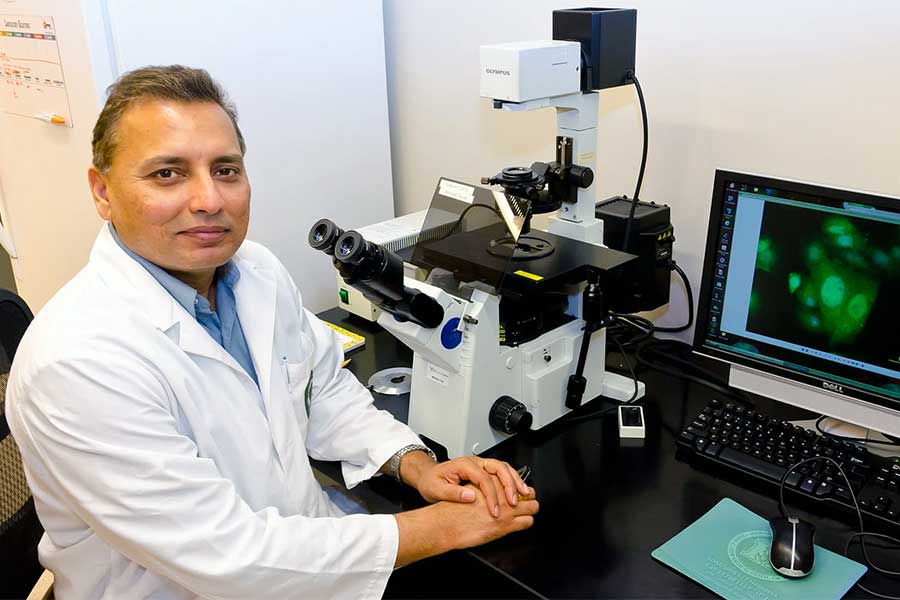
The U.S. Food and Drug Administration has granted Breakthrough Device Designation to a new precision oncology tool that could help doctors choose the most effective chemotherapy for each patient, a milestone that marks more than two decades of research into personalized cancer treatment.
The test, called ChemoID, works by analyzing a sample of a patient’s tumor to determine which chemotherapy drugs are most likely to kill the cancer cells. Developed by Dr. Jagan Valluri, a professor of biological sciences, and his colleagues, the tool is designed to give oncologists a clear, evidence-based answer before treatment begins. In clinical studies, the approach has shown the ability to extend survival for patients with aggressive cancers, including those with only months to live. Multi-institutional trials at major cancer centers across the country have further validated its role in improving treatment decisions.
“For patients who have months to live, every month, every week, every day is extremely important,” Valluri said. “Our test allows oncologists to dial the right treatment for that person.” The Breakthrough Device Designation from the FDA is reserved for technologies that offer a significant advantage over existing options for life-threatening conditions. It is intended to speed up the development and review process, helping promising tools reach patients more quickly.
The designation recognizes more than 20 years of research aimed at moving beyond the one-size-fits-all approach to chemotherapy. Instead of relying on averages from large clinical trials, ChemoID provides a personalized readout of how a specific patient’s tumor responds to various drugs. This could spare patients from ineffective treatments and their side effects, while giving those with limited time a better chance at meaningful survival.
With the FDA’s backing, the next steps include expanded clinical testing and a path toward broader regulatory clearance. If approved for widespread use, ChemoID could become a standard part of cancer care, helping oncologists and patients make more informed, hopeful choices from the start of treatment.