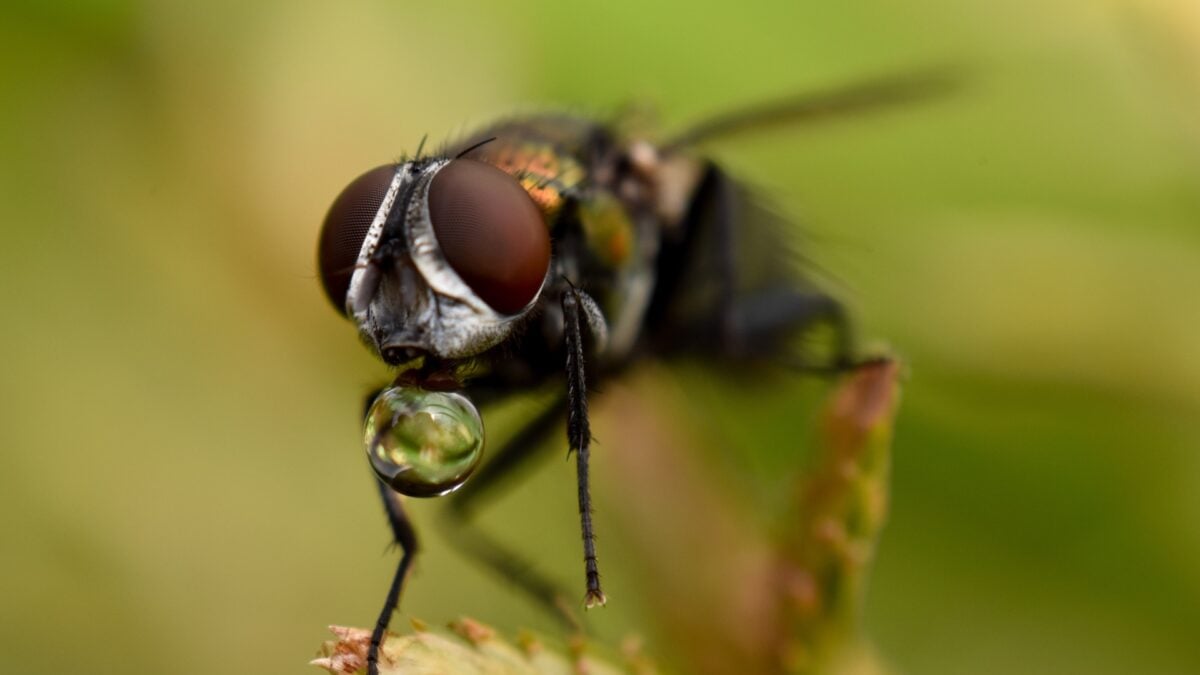
The U.S. Food and Drug Administration has cleared a second species of fly larvae for use in medical wound therapy, expanding options for patients with stubborn, nonhealing injuries. The agency granted 510(k) clearance to MEDIFLY Maggots, a treatment using the larvae of Lucilia cuprina, also known as the Australian sheep blowfly, to remove dead tissue from chronic wounds.
Cuprina Holdings, the biomedical company behind the product, announced the approval last week. The therapy is indicated for pressure ulcers, diabetic foot ulcers, and wounds that have failed to heal after surgery or injury. Known as maggot debridement therapy, the procedure involves applying sterile, medical-grade larvae to a wound under professional supervision. The maggots secrete enzymes that break down dead tissue into liquid, which they then consume. The larvae used in treatment are only a few millimeters long, smaller than a grain of rice, though they grow to about 12 millimeters during the process. Healthcare providers apply them either directly onto the wound or inside a special sealed dressing that manages fluid drainage. Treatment typically lasts a few days, though some patients may need multiple rounds.
The approval makes Lucilia cuprina the second fly species cleared by the FDA for this purpose. The first, Lucilia sericata, or the common green bottle fly, was approved in 2004. Cuprina Holdings now holds clearance for both species. The company noted that Lucilia sericata is more familiar in Western wound care, while Lucilia cuprina is better known in warmer regions, potentially allowing the therapy to reach broader markets. Importantly, these maggots feed only on dead tissue, distinguishing them from parasitic species like the New World screwworm, whose larvae attack living flesh and recently reappeared in the United States.
Maggot therapy has ancient roots, with evidence of its use by the Mayans and during the American Civil War. A systematic review published last year confirmed that the treatment can clear dead tissue from chronic wounds faster than conventional methods, though it did not clearly improve overall healing rates. “Maggot debridement therapy has earned its place in modern wound care, and adding a second FDA-cleared species strengthens the entire field,” said Dr. Ronald Sherman, Cuprina’s Medical and Scientific Director. With two approved species now available, clinicians may have more flexibility in tailoring treatment to individual patients and regional needs, offering a renewed sense of hope for those living with slow-healing wounds.