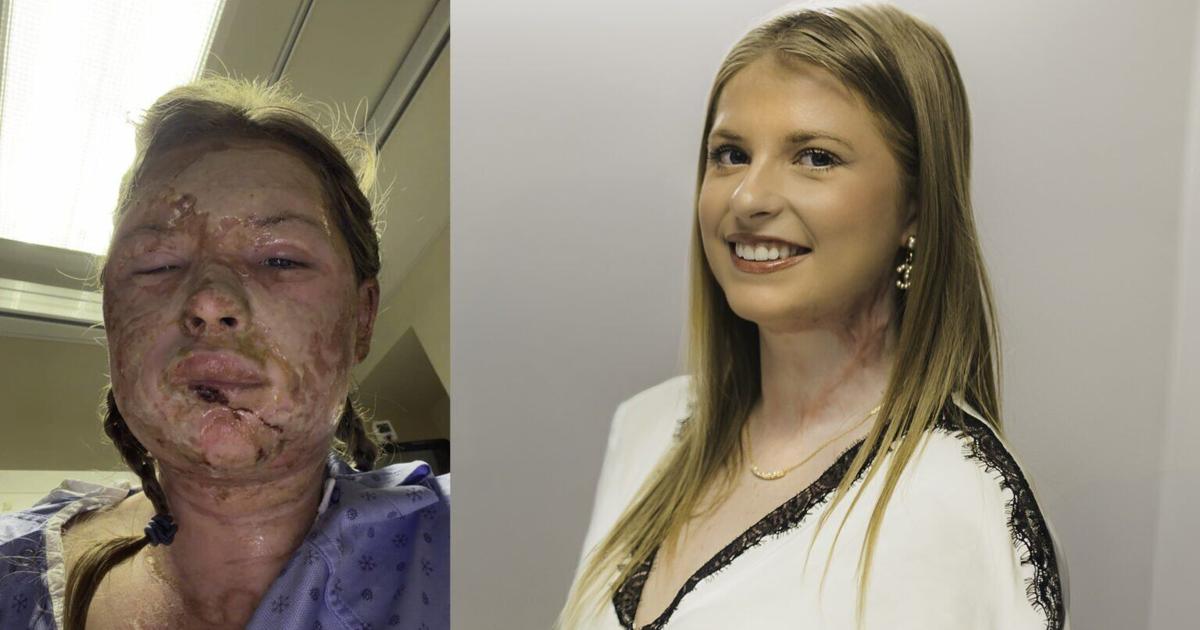
An 18-year-old woman who suffered deep burns to her face and neck in a fire has become the first patient in history to have her skin fully regenerated using a treatment that bypasses traditional skin grafting entirely. Doctors at Hamilton Health Sciences injected microscopic cellular messengers called exosomes directly into her wounds, achieving complete healing in just 14 days with no scarring.
Kaitlin Jeffrey was injured in a house fire near Western University in December 2025. Her burns were so deep that the lead surgeon, Dr. Marc Jeschke, feared any skin graft would heal with severe scarring. Instead of removing damaged tissue and transplanting healthy skin from elsewhere on her body, the team sought emergency approval from Health Canada to try an experimental approach. Exosomes are tiny fat-based particles that naturally carry signals between cells. Unlike grafts, they do not contain genetic material, meaning they can be transferred between any two people without risk of rejection. For Jeffrey’s procedure, one trillion exosomes were sourced from a commercial supplier in the United States and injected directly into the burned areas.
The results stunned the burn team. “We predicted it would take weeks and weeks for the healing to happen, and the burn team was absolutely amazed and stunned that her face was remarkably healed in 14 days,” Jeschke said. The treatment produced what he described as complete and near perfect regeneration of the skin, avoiding the visible scars and unnatural texture that often result from grafts. Traditional skin grafting, while effective, typically leaves significant scarring at the wound edges and can look markedly different from a patient’s original skin.
What Comes Next for Exosome Burn Therapy
Despite the breakthrough, Jeschke cautioned that the treatment is far from ready for widespread use. The patient’s youth and overall health may have contributed to the rapid healing. “What happens if you give this treatment to a 60-year-old patient who has a significant past medical history? Would it work as well?” he asked. The next step will require multiple clinical trials, which demand a pharmaceutical partner and substantial funding. Currently, no facility in Hamilton can produce exosomes at the scale needed for trials or broader treatment.
Jeschke hopes the attention on Jeffrey’s case will encourage companies to invest in exosome production and research. His long-term vision is for the therapy to become the first-line option for burns on visible and functionally critical areas such as the face, hands, and neck. For now, the team has gathered crucial data on dosing and healing timelines, laying the groundwork for a future where severe burns may be healed without surgery, without grafts, and without scars.