Millions of people taking blockbuster weight loss drugs like Ozempic and Wegovy are losing more than just fat. They are quietly losing muscle, a side effect that can sap strength and slow recovery. Now, researchers have discovered that an experimental drug already deemed safe in humans may help solve that problem, at least in mice.
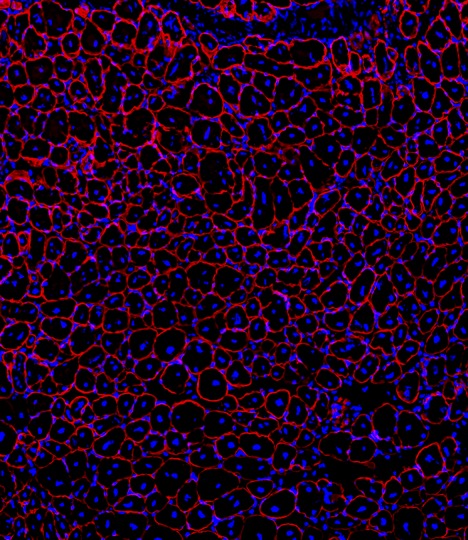
In a study published in the Proceedings of the National Academy of Sciences, scientists found that an oral drug called PGDHi, which targets an enzyme linked to aging, helped young obese mice preserve muscle regeneration and strength while they were also taking semaglutide, the active ingredient in Ozempic and Wegovy. Mice that received both drugs lost about 25 percent of their body weight and shed substantial fat, just like those on semaglutide alone. But crucially, the combination therapy restored the animals’ ability to repair muscle after injury, while semaglutide alone left their muscles weaker and slower to heal.
“It wasn’t just that there was an initial loss of muscle with the GLP-1 receptor agonist, it also reduced the regenerative capacity of the young mouse muscles,” said Minas Nalbandian, a postdoctoral scholar and the study’s first author. “PGDHi enhanced that regenerative response even in the setting of semaglutide-induced weight loss.” The drug works by blocking an enzyme called 15-PGDH, which normally limits a molecule that is essential for activating muscle stem cells. By inhibiting that enzyme, the drug allows stem cells to proliferate and rebuild damaged tissue.
Importantly, the drug did not act as a general muscle builder in young healthy mice. It only boosted muscle repair after injury or, the researchers suspect, after regular exercise. This suggests the therapy is a targeted regenerative aid rather than a performance enhancer. The experimental compound, MF-300, has already completed Phase 1 clinical trials and been found safe in humans. Phase 2b trials for age-related muscle loss, known as sarcopenia, are planned for later this year.
What This Means for Patients
“There is a major unmet need for a drug that can help GLP-1 users preserve their muscle health and strength,” said Helen Blau, PhD, professor of microbiology and immunology and the study’s senior author. She noted that muscle loss is not unique to GLP-1 drugs, but occurs with any significant caloric restriction. “The effect we’re seeing with GLP-1s isn’t unique to the drugs, but to caloric restriction in general.”
The researchers caution that the drugs have yet to be tested in older obese individuals, who face different risk factors for muscle loss. Still, the outlook is hopeful. Blau envisions a future where a PGDHi becomes a standard companion to GLP-1 medications, allowing patients to shed fat without sacrificing the muscle that keeps them strong and mobile. “We’re on the way to tackling a major and unwanted side effect of GLP-1 drugs,” she said.