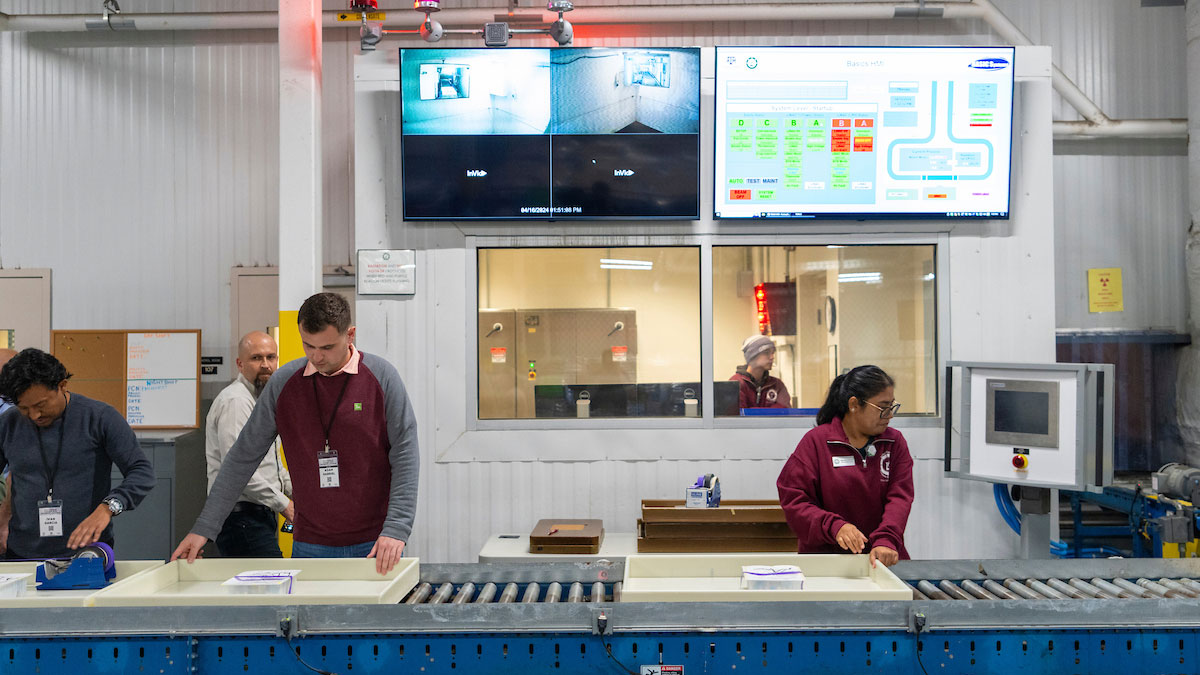
A new partnership between researchers and the U.S. Department of Energy is accelerating the use of electron beam technology to sterilize medical devices, offering a faster and safer alternative to traditional radioactive methods. The approach could reduce reliance on hazardous materials like cobalt-60 while improving public health protections.
The National Center for Electron Beam Research and the Department of Energy’s National Nuclear Security Administration are working together to promote eBeam technology as a replacement for high-activity radioactive sources. Traditional gamma irradiation relies on cobalt-60, which poses risks in handling, storage, and disposal. Electron beams, by contrast, use electricity to generate high-energy electrons that kill pathogens on medical devices without the need for radioactive isotopes. Dr. Suresh Pillai, director of the eBeam center, said the method “can sterilize medical devices faster than traditional gamma irradiation while bypassing the risks of managing those materials.”
The NNSA’s Office of Radiological Security is supporting feasibility studies and educational outreach to help medical device manufacturers adopt eBeam technology. The effort also includes Team Nablo, a collaboration of 20 international organizations and 11 medical device manufacturers aimed at bridging the information gap for companies considering the switch. Christine Bent, assistant deputy administrator for global material security at the U.S. Department of Energy, said the partnership “advances U.S. industry, prevents infection and ensures the safety of our communities.”
Medical device sterilization is a critical step in preventing infections during surgeries and other procedures. By moving away from radioactive sources, hospitals and manufacturers can reduce security risks and environmental hazards. The eBeam center, part of Texas A&M AgriLife Research, has been a leader in developing this technology for decades. Pillai noted that the partnership “unites ORS’s outreach with the eBeam center’s research excellence, promoting transformative solutions that safeguard medicine and public health.”
Looking ahead, the collaboration aims to expand eBeam adoption worldwide, making sterilization faster, safer, and more sustainable. As more manufacturers transition away from radioactive materials, patients and healthcare workers stand to benefit from a cleaner, more secure supply chain for essential medical tools.