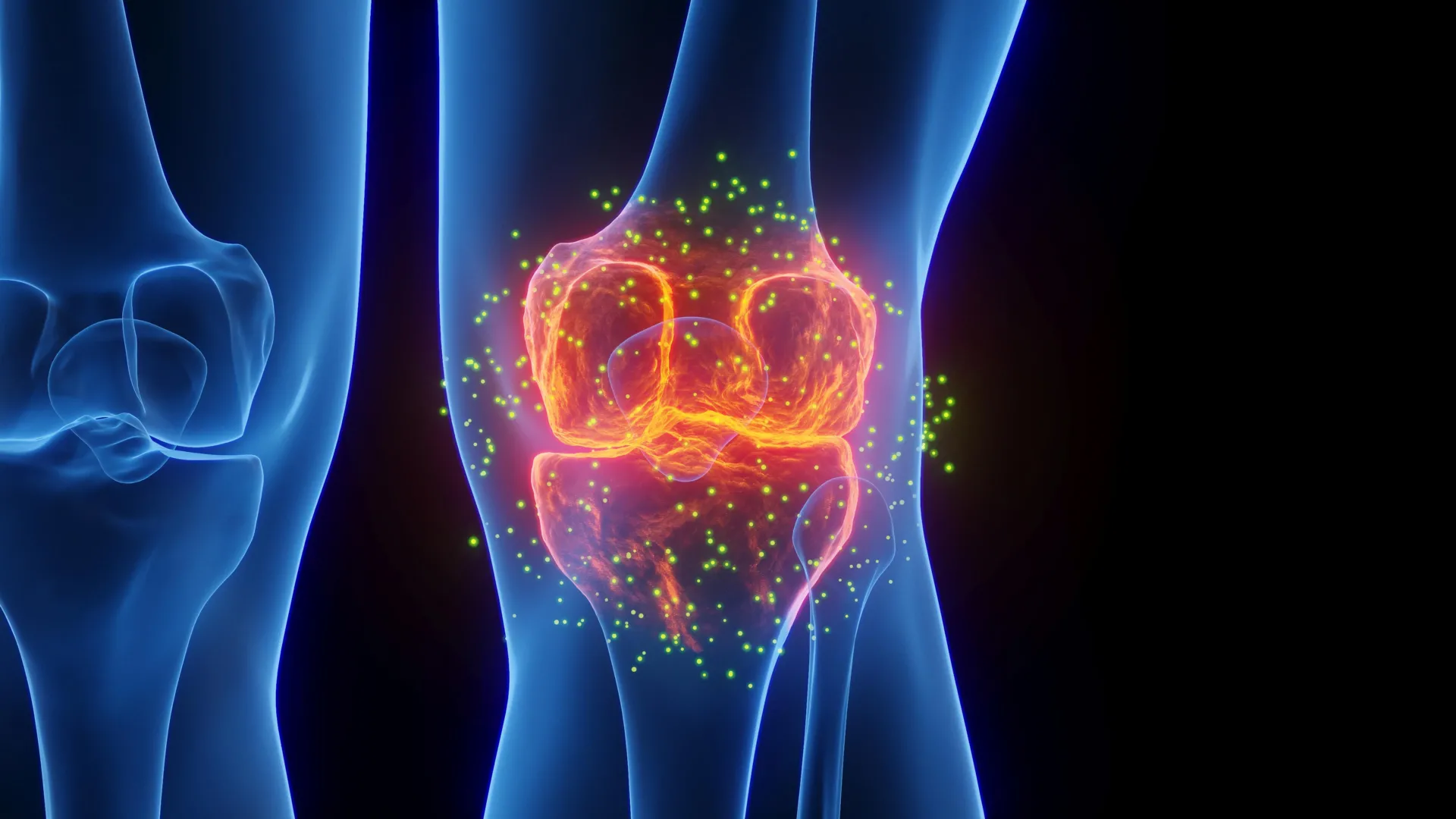
A treatment that targets an aging-related protein has restored lost knee cartilage in older mice and prevented arthritis after joint injuries, Stanford Medicine researchers reported. The findings offer a potential path toward the first medication that could repair damaged cartilage in humans, potentially reducing the need for knee and hip replacement surgeries.
The therapy works by blocking a protein called 15-PGDH, which the team calls a “gerozyme.” This protein becomes more abundant with age and breaks down a molecule called prostaglandin E2, which is critical for tissue repair. When researchers gave older mice a small molecule drug that inhibits 15-PGDH, cartilage that had thinned with age grew thicker across the joint surface. The regenerated tissue was hyaline cartilage, the smooth type needed for healthy joint function, rather than the less effective fibrocartilage. “Cartilage regeneration to such an extent in aged mice took us by surprise,” said study co-senior author Nidhi Bhutani, PhD. “The effect was remarkable.”
In a separate experiment, mice that received the inhibitor twice weekly for four weeks after an ACL-like injury were far less likely to develop osteoarthritis. Treated animals also walked more normally and placed more weight on the injured limb. When the team tested the drug on human cartilage from knee replacement surgeries, the tissue began producing new, functional cartilage after one week. The approach appears to work by nudging existing cartilage cells called chondrocytes back to a more youthful state, rather than relying on stem cells. “This is a new way of regenerating adult tissue, and it has significant clinical promise for treating arthritis due to aging or injury,” said co-senior author Helen Blau, PhD.
Osteoarthritis affects about one in five U.S. adults and generates roughly $65 billion in direct health care costs each year. No approved medication can slow, stop, or reverse the underlying disease. An oral version of the 15-PGDH inhibitor is already being tested in clinical trials for age-related muscle weakness. The researchers plan to continue investigating the treatment for joint repair, with the goal of moving toward human trials. “Until now, there has been no drug that directly treats the cause of cartilage loss,” Bhutani said. “But this gerozyme inhibitor causes a dramatic regeneration of cartilage beyond that reported in response to any other drug or intervention.”