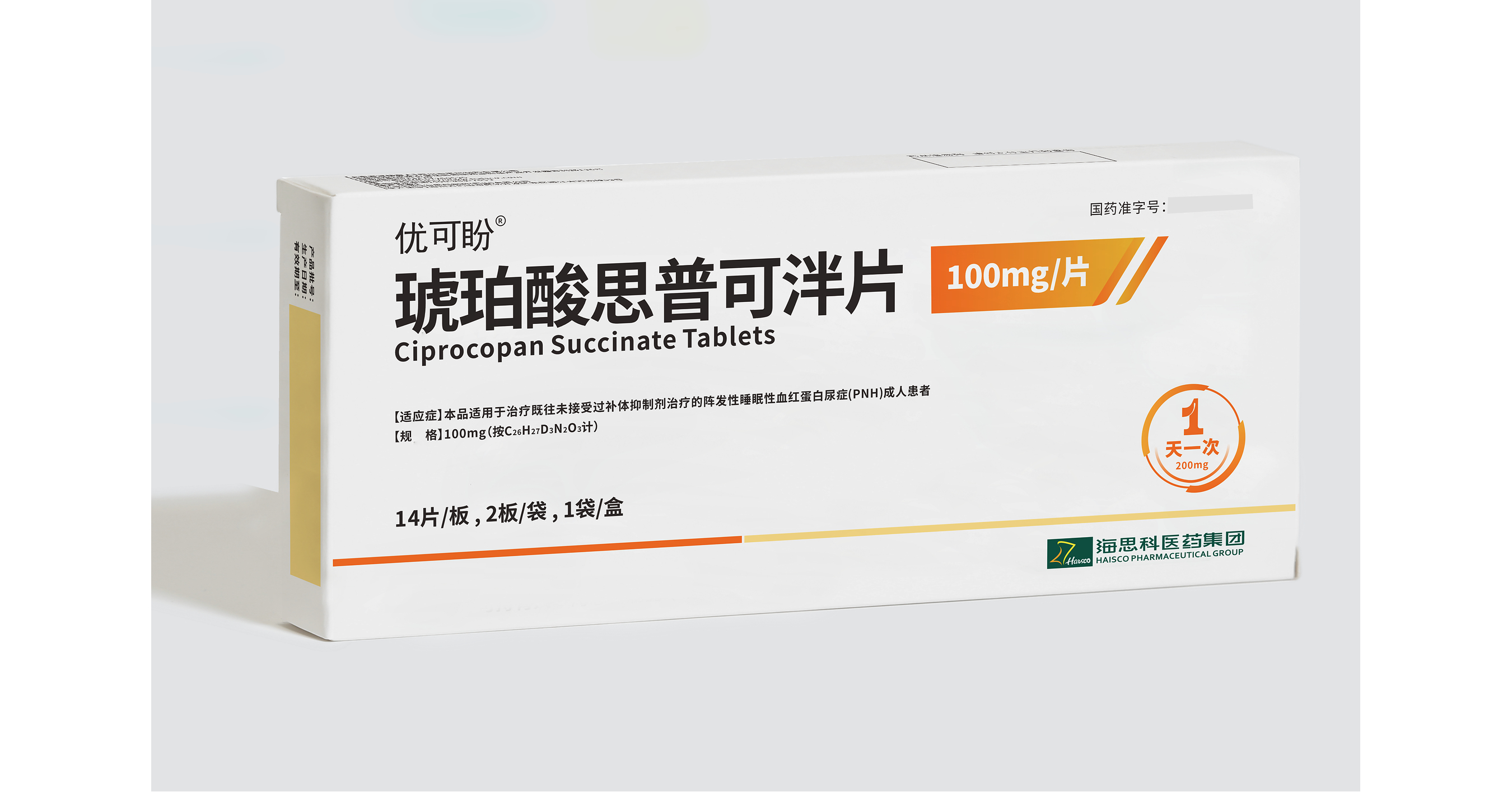
Chinese regulators have approved a new once-daily oral medication for adults with paroxysmal nocturnal hemoglobinuria (PNH), a rare and potentially life-threatening blood disorder. The decision offers patients a more convenient treatment option that targets the disease at its source in the complement system.
The National Medical Products Administration of China granted marketing approval for Ciprocopan Succinate Tablets, developed by Haisco Pharmaceutical Group. It is the world’s first once-daily oral complement factor B inhibitor, designed to block a key step in the alternative complement pathway. PNH is an acquired disorder in which red blood cells are destroyed prematurely, leading to fatigue, kidney problems, pain, and a heightened risk of blood clots. Before modern therapies, patients faced a poor prognosis.
Current standard treatments include C5 inhibitors, which control some hemolysis but do not stop upstream complement activation. Many patients still experience residual anemia, fatigue, or require blood transfusions. Twice-daily dosing regimens also carry a risk of breakthrough hemolysis. Ciprocopan Succinate Tablets addresses these gaps by inhibiting complement factor B, thereby suppressing both pathway initiation and the amplification loop that drives red blood cell destruction. The drug requires no dosage adjustment for patients with mild to moderate kidney or liver impairment and can be taken with or without food, which may improve adherence for long-term management.
The approval is part of a broader push in China to address unmet needs in rare diseases. Haisco has built a pipeline of 27 Class 1 innovative drug programs and now has five approved innovative medicines. The company is also taking its research global. In June 2026, it licensed the rights to develop and commercialize the ciprocopan program outside Greater China, Southeast Asia, and India to U.S. based Nuvectis Pharma. The deal includes $40 million in upfront and near-term payments and up to $1.421 billion in additional milestone payments, plus tiered royalties on future sales.
With this approval, patients in China now have access to a targeted, once-daily oral therapy that may reduce the burden of injections and improve quality of life. As global development moves forward, the hope is that this China originated innovation will reach patients worldwide, offering a new standard of care for those living with PNH.