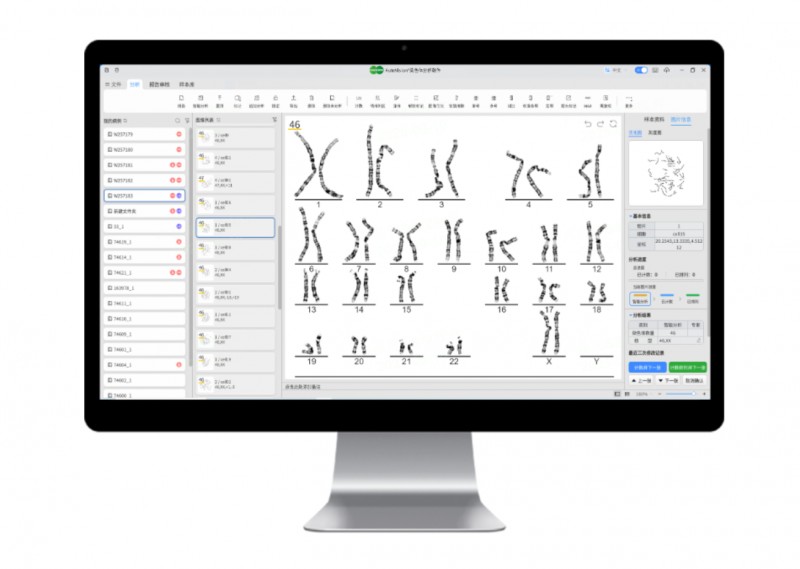
A medical imaging artificial intelligence system has become the world’s first to receive the highest level of regulatory approval for automated chromosome analysis, a breakthrough that could dramatically speed up diagnoses for birth defects and infertility. The software, called AI AutoVision, was granted a Class III medical device certificate by China’s National Medical Products Administration on May 22, marking a major step in bringing AI-powered diagnostics into routine clinical care.
The technology tackles a longstanding bottleneck in prenatal and reproductive medicine: manually analyzing chromosomes under a microscope. Traditionally, clinicians must identify, count, and arrange 46 chromosomes for each patient, a process that takes an average of 34 minutes per case and can push report turnaround times to 30 days. Training a qualified analyst requires three to five years, creating a persistent shortage of specialists. AI AutoVision automates the entire workflow, performing one click segmentation, counting, arrangement, and abnormality detection. In a multicenter clinical trial involving 1,734 cases, the system achieved 100 percent sensitivity and specificity for detecting numerical chromosome abnormalities and 94.31 percent sensitivity for structural abnormalities. The average analysis time dropped from 34.42 minutes to 11.19 minutes, and report turnaround shrank from 30 days to between four and seven days.
The Class III designation is China’s strictest regulatory tier, requiring rigorous clinical trials and years of review. This approval not only validates the product but also the underlying iMedImage foundation model, a medical imaging AI with 104 billion parameters that supports 19 imaging modalities. The company behind the technology has partnered with 65 hospitals to incubate 92 imaging models across 32 organs and 64 disease areas. With the first Class III approval in hand, subsequent AI tools built on the same foundation could move through regulatory channels more quickly, potentially accelerating the adoption of AI across radiology and pathology.
For patients, the impact is immediate. Faster chromosome analysis means earlier detection of conditions such as Down syndrome and other chromosomal disorders, as well as quicker results for couples undergoing fertility treatments. The technology has already been deployed in more than 400 hospitals across China, and the Class III approval opens the door for wider use and potential inclusion in insurance reimbursement. As the global AI medical imaging market is projected to grow from roughly USD 1.6 billion in 2024 to USD 9.3 billion by 2030, this approval signals that AI assisted diagnostics are moving beyond research labs and into the everyday practice of medicine, offering hope for faster, more accurate care.