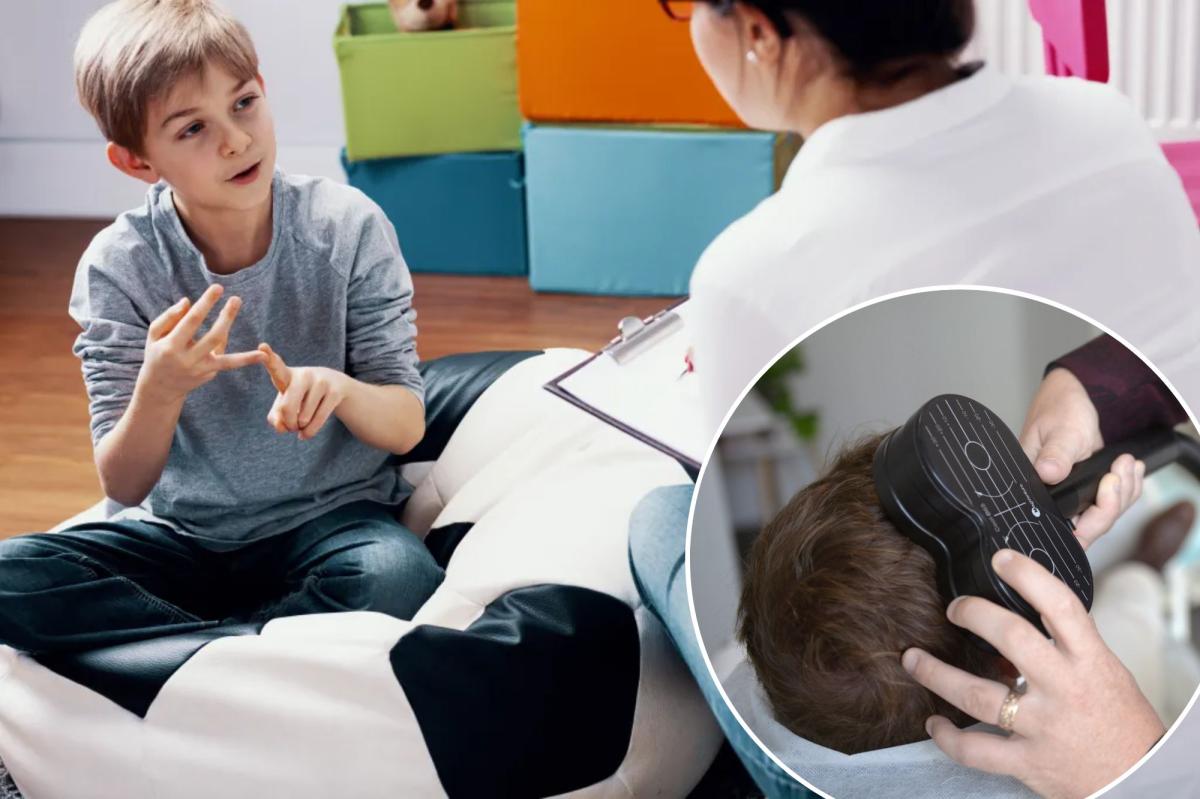
A new noninvasive brain stimulation technique could help children with autism improve social communication skills in as little as five days, according to early research from China. The findings offer a potential new avenue for families seeking support for one of the most challenging aspects of autism spectrum disorder.
In the study, researchers enrolled 200 children aged 4 to 10 with autism, including 167 boys and 33 girls. Half of the participants also had an intellectual disability. The children were randomly assigned to receive either accelerated continuous theta burst stimulation (a-cTBS) or a sham placebo procedure. Over five consecutive days, each child in the treatment group completed 10 sessions per day, during which a magnetic coil delivered gentle pulses to the brain’s left primary motor cortex, an area linked to movement, language and social cognition. The goal was to calm overactive brain regions and boost underactive ones, improving the flexibility of neural networks involved in communication.
After treatment, researchers measured social communication using the Social Responsiveness Scale (SRS-2). The a-cTBS group showed significantly greater improvements compared to the control group, both immediately after the five-day regimen and at a one-month follow-up. The treatment group also demonstrated greater gains in language abilities. Side effects, including restlessness and scalp discomfort, were mild to moderate and resolved on their own. The researchers called the approach “a feasible, effective and scalable therapeutic option for children with autism spectrum disorder, including those with intellectual disability.”
Outside experts urged cautious optimism. Roi Cohen Kadosh, a professor of cognitive neuroscience at the University of Surrey, noted that the treatment group started with more severe difficulties at baseline, which could partly explain the size of the improvement. “A longer follow-up is needed to determine whether the benefits are durable,” he said. David McGonigle, a lecturer at Cardiff University, raised concerns about using brain stimulation in young children, saying “we are still uncertain about its effect on the developing brain.” The study also had a relatively short follow-up period of just one month.
The need for new tools is clear. Autism diagnoses have risen from 1 in 150 children in 2000 to 1 in 31 by 2022, driven by broader screening and awareness. Research suggests about 3 in 4 children with autism have some level of language impairment by kindergarten age, and up to 35% are minimally verbal or do not speak at all. Early language ability is one of the strongest predictors of later outcomes, including academic success and independent living. While speech therapy remains a mainstay, progress varies widely. This early trial suggests brain stimulation could one day offer a complementary option, but larger studies with longer follow-ups are needed to confirm whether the benefits last and remain safe for young, developing brains.