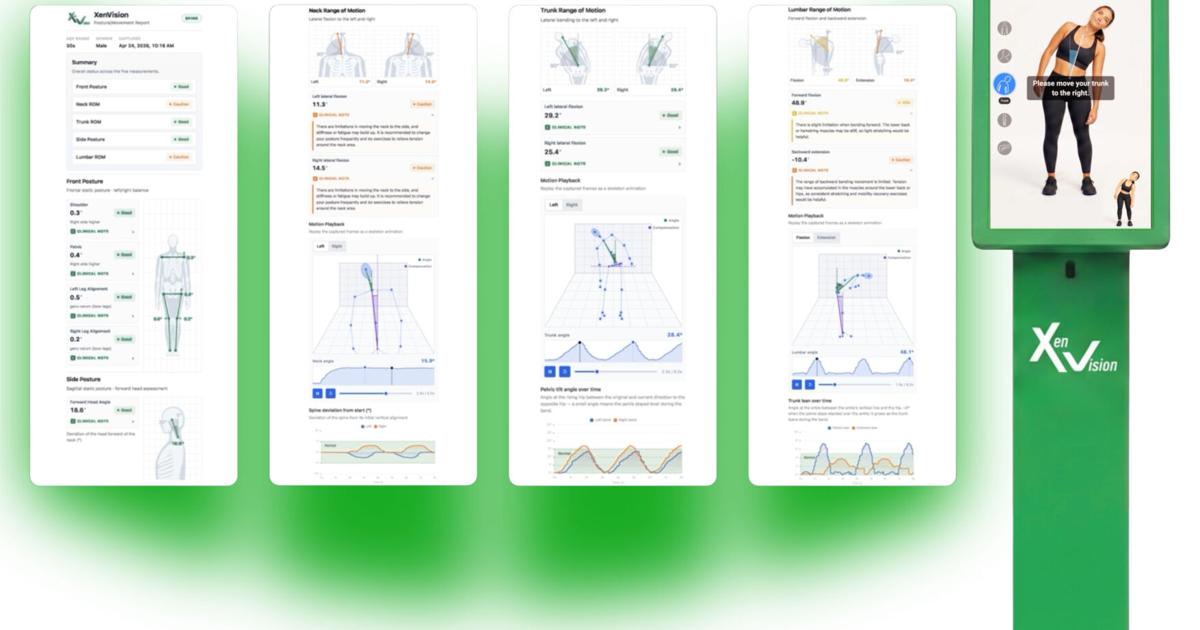
A new artificial intelligence platform can analyze a person’s posture and movement in under two minutes, potentially catching musculoskeletal problems before they cause pain or disability. The technology, called XenVision, was unveiled this week at a major computer graphics conference, signaling a shift toward using AI for preventive orthopedic care.
Developed by the medical technology company Xenco Medical, the system combines computer vision, biomechanics, and clinical artificial intelligence. It was trained on more than 700,000 real-world musculoskeletal assessment datasets, giving it the ability to recognize subtle deviations in posture and movement that often precede symptomatic disease. The platform is designed to produce clinically meaningful biomechanical analyses quickly, without requiring patients to undergo lengthy exams or expensive imaging.
For patients, this could mean earlier detection of conditions such as scoliosis, gait abnormalities, or joint instability. Traditional screening for musculoskeletal issues often relies on physical exams or X-rays, which may not catch problems until they become symptomatic. XenVision aims to fill that gap by offering a noninvasive, data-driven screening tool that can be used in clinics, sports medicine facilities, or even workplace wellness programs. The company says the system is engineered to flag risks before they lead to injury or chronic pain.
What Happens Next
Xenco Medical plans to seek regulatory clearance for XenVision and begin pilot studies in clinical settings. The company envisions the platform as a routine screening tool, similar to how blood pressure checks are used to catch cardiovascular risks early. If successful, the technology could help reduce the burden of musculoskeletal disorders, which affect millions of people worldwide and are a leading cause of disability. Researchers and clinicians are watching closely as AI continues to move from the lab into everyday medicine, offering hope for earlier and more personalized care.