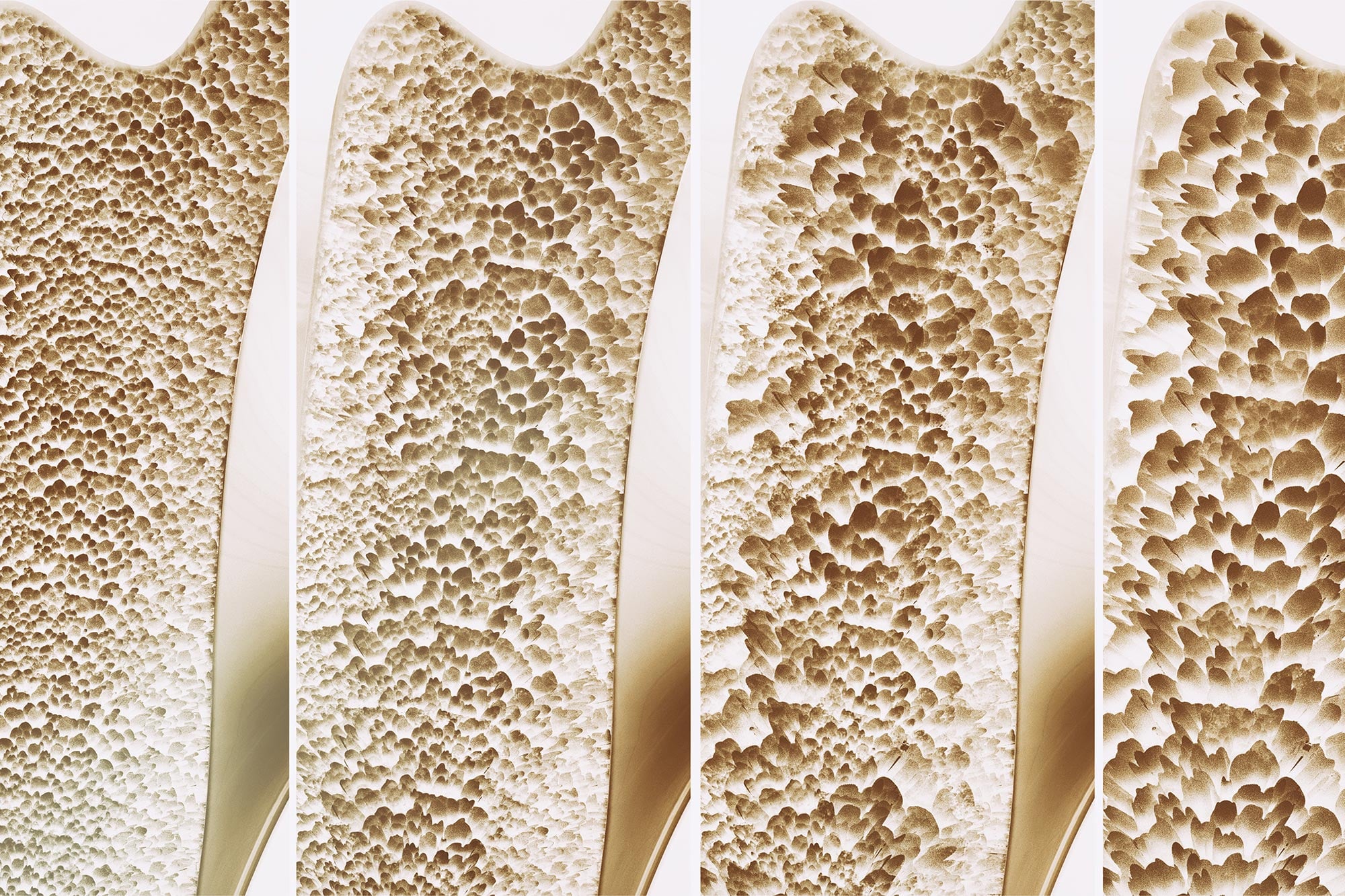
Scientists have uncovered a previously unknown signaling pathway through which vitamin K helps bone-forming cells direct the breakdown and renewal of skeletal tissue, a finding that could open new avenues for treating osteoporosis and other bone diseases. The discovery reveals that vitamin K does far more than support bone mineralization. It also plays an active role in coordinating the delicate balance between cells that build bone and those that break it down.
Researchers led by Dr. Mathieu Ferron at the Montreal Clinical Research Institute in Canada studied how vitamin K dependent gamma carboxylation influences interactions between osteoblasts, which form bone, and osteoclasts, which resorb or break down bone. Using genetically engineered mice and cell culture experiments, the team found that vitamin K signaling acts primarily through osteoblasts. When the researchers removed a key enzyme from osteoblasts in male mice, the animals developed substantially greater bone mass by six months of age, along with denser and more interconnected bone structures. The increase was largely due to reduced bone breakdown rather than increased bone formation. Mice lacking the enzyme had fewer osteoclasts and lower blood markers associated with bone resorption.
The team then identified the signaling protein GAS6, which is released by osteoblasts and activates receptors on pre-osteoclasts. Laboratory experiments showed that gamma carboxylated GAS6 strongly stimulated osteoclast formation, creating larger multinucleated cells with greater bone resorbing capacity. Blocking the GAS6 receptors with drugs significantly reduced osteoclast production, confirming the pathway's central role. In contrast, transgenic mice with elevated circulating GAS6 showed the opposite pattern: lower bone density, more osteoclasts, and increased bone resorption. The study was published in Bone Research.
“Our findings reveal an unexpected mechanism through which osteoblasts actively regulate osteoclast maturation,” said Dr. Ferron. “Vitamin K dependent gamma carboxylation not only affects bone mineralization. It also controls how osteoblasts communicate with osteoclast precursors through GAS6 signaling.”
The researchers note that targeting GAS6 or its receptors could eventually help modulate excessive bone resorption while preserving normal bone remodeling. The findings provide a new framework for understanding how vitamin K influences skeletal biology and point to potential new strategies for treating osteoporosis and other metabolic bone disorders. Further research will be needed to translate these insights into therapies for patients.