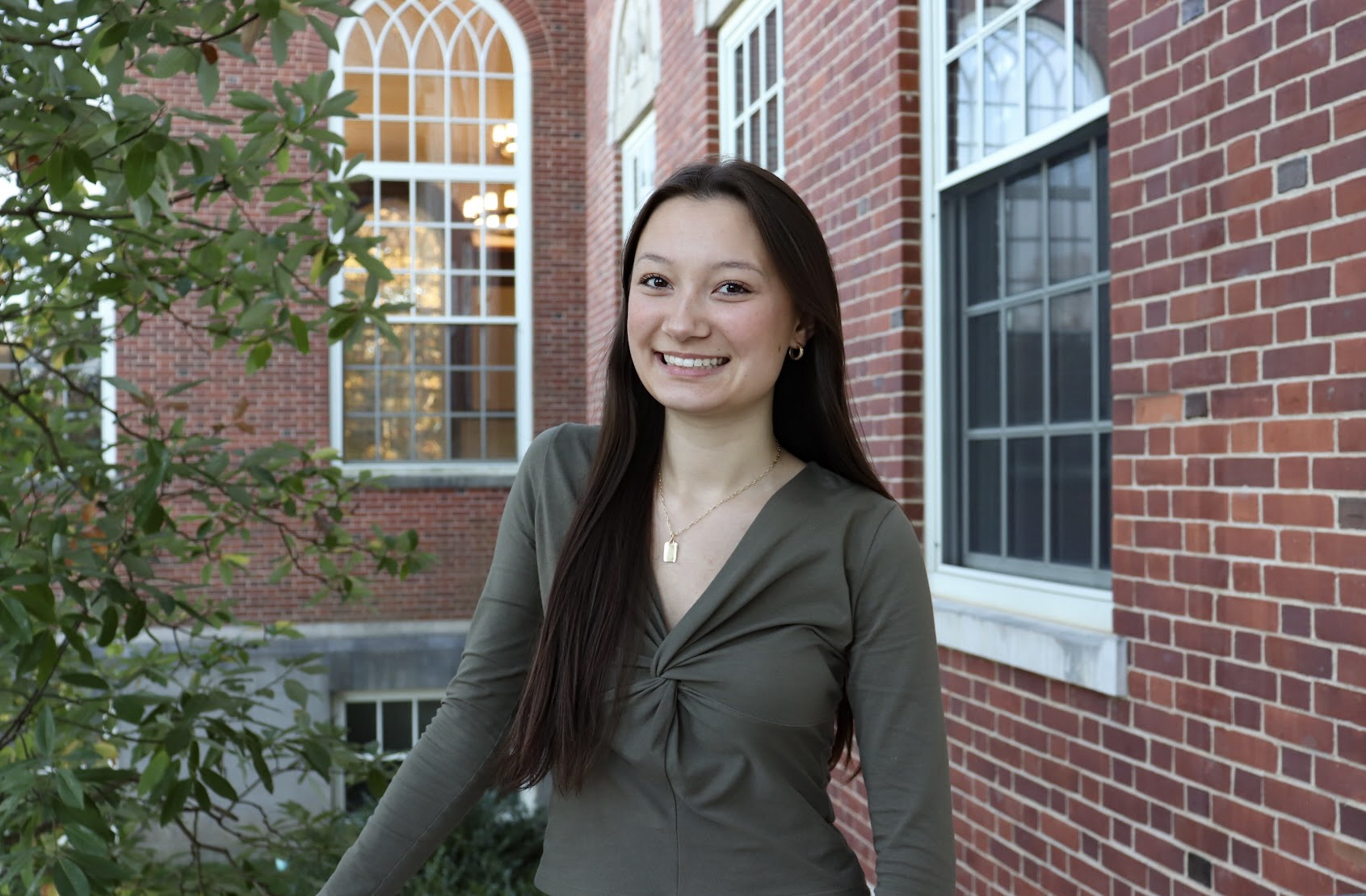
A University of Connecticut pre-med student has spent her undergraduate career tackling two of medicine’s most pressing questions: how to discover new antibiotics and how to make healthcare more responsive to patients’ religious beliefs. Hailey DeWalt, a molecular and cell biology major graduating this year, is already reshaping how future doctors might think about treatment.
In one lab, DeWalt works with the Hawaiian bobtail squid, an animal whose reproductive gland contains a unique mix of bacteria. The squid uses these bacteria to shield its eggs from infection. DeWalt wondered whether those same bacteria could fight human infections. “My thought was, if they’re protecting the eggs against marine bacteria, I wonder if they would additionally have potential against human infectious bacteria,” she said. The work, conducted in the lab of professor Spencer Nyholm, recently earned her top honors at the Big East Undergraduate Research Symposium.
In a separate line of research, DeWalt explored how religion shapes healthcare experiences. After working as a medical assistant in a primary care office in summer 2024, she saw firsthand how deeply faith influences patients’ decisions. “I came to see how their religion affects their health care experiences in ways that I had never even imagined before,” she said. She joined the Spirituality, Meaning, and Health Lab led by professor Crystal Park, where she studied how clinicians can better support religious populations. The experience led her to create a podcast called “The Cultural Blind Spot,” funded by a university fellowship, in which she interviews students about how religion affected their medical care and what they wish providers understood better.
DeWalt sees a common thread across her work. “Research is something I turn to whenever I have a topic I’m passionate about,” she said. She believes medicine must go beyond developing drugs and treatments. “We can provide other options as well, like yoga or therapeutics. And we also need to understand their cultural beliefs or their backgrounds; how those are all ultimately contributing to their experience.”
After graduation, DeWalt plans to take a growth year as a Clinical Research Assistant in a neurology office before applying to medical school. She is considering specialties in pediatrics or gastroenterology. For now, she encourages fellow students to stay open to unexpected opportunities. “There is power in the not knowing,” she said. “That way you’re able to ask those questions, make connections with other mentors and ultimately, I feel, learn so much more.”