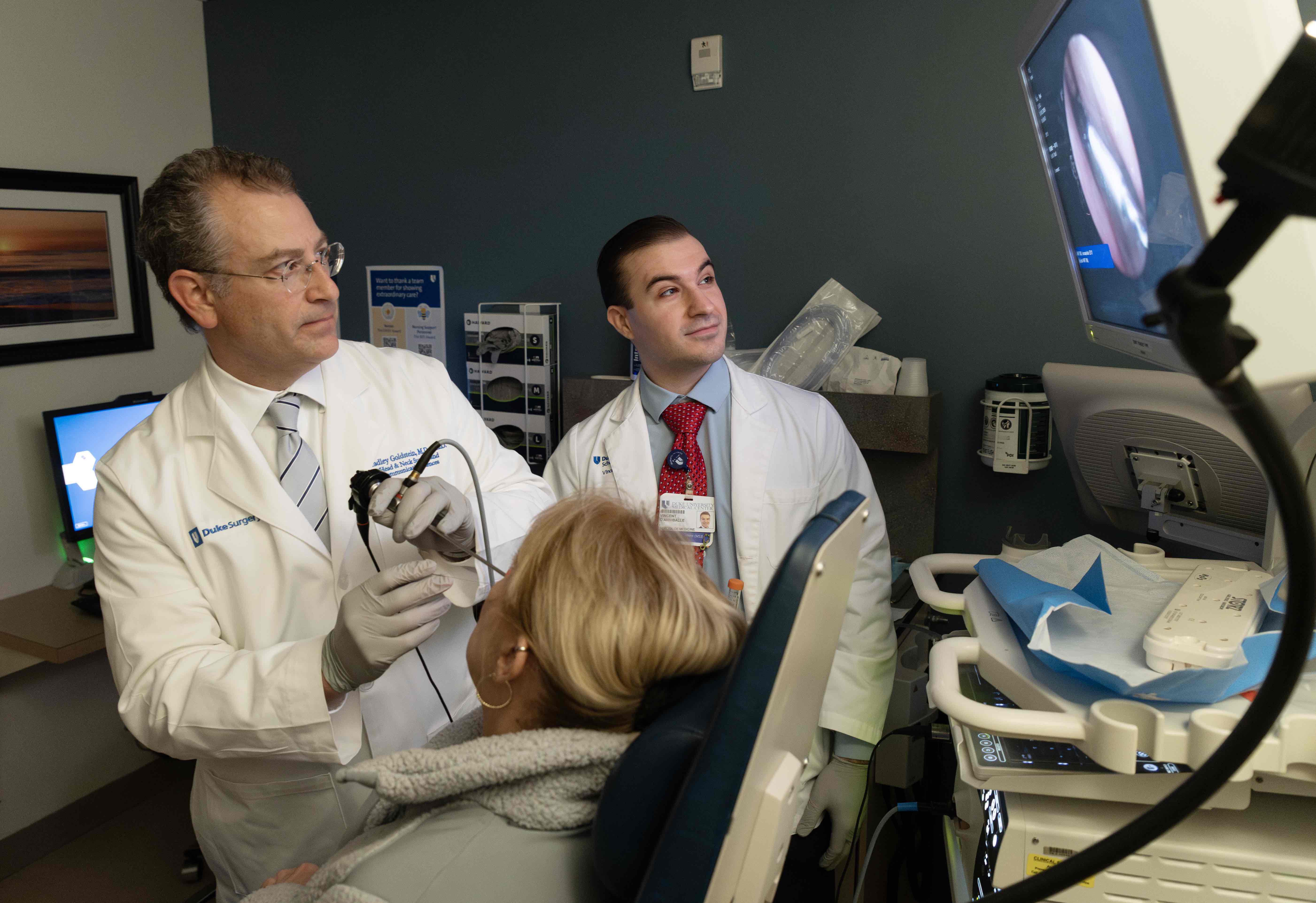
For millions of families facing Alzheimer's disease, the search for early answers has often been a frustrating race against time. Catching the illness at its very beginning, when emerging therapies hold the most promise, has remained a significant challenge. Now, a promising development from researchers offers a surprisingly simple and hopeful new path. Scientists have demonstrated that a quick and gentle nasal swab, performed in a routine outpatient visit, can detect early biological signals of Alzheimer's even before memory lapses become apparent.
The procedure itself is straightforward and takes just minutes. After a numbing spray is applied, a clinician guides a tiny brush high into the nasal cavity to collect cells from the olfactory region, home to the nerve cells responsible for smell. By analyzing the genetic activity within these collected nerve and immune cells, researchers discovered distinct patterns that clearly distinguished individuals with early or clinical Alzheimer's from healthy participants. This method provides a rare window into living neural tissue, a stark contrast to past reliance on post-mortem brain studies. As study author Vincent M. D'Anniballe noted, this access to living tissue opens entirely new possibilities for both diagnosis and the development of future treatments.
The impact of such an early detection tool is profound. Current blood tests are effective but often identify markers that appear later in the disease process. This nasal swab, by capturing active cellular changes, could identify at-risk individuals much sooner. In the recent study, a combined gene score from the nasal tissue correctly identified early and clinical Alzheimer's with approximately 81% accuracy. This included individuals who had laboratory signs of the disease but were not yet experiencing any symptoms. "If we can diagnose people early enough, we might be able to start therapies that prevent them from ever developing clinical Alzheimer's," said Dr. Bradley J. Goldstein, the study's corresponding author, highlighting the preventive potential of this approach.
For volunteer participant Mary Umstead, the research is deeply personal. She joined the study to honor her late sister, Mariah, who was diagnosed with young-onset Alzheimer's at age 57 after years of subtle, unnoticed signs. "I would never want any family to have to go through that kind of loss," Mary said, expressing her hope that this work could spare others a similar journey. Her participation underscores the human urgency driving this scientific advance, where a simple swab could one day lead to earlier interventions and preserved quality of life.
Encouraged by these initial results, the research team is now expanding their work to much larger groups of participants. They are also actively exploring whether this nasal swab method could be used to monitor how well new treatments are working over time, providing a dynamic tool for both clinical trials and patient care. With a patent filed and further studies underway, this non-invasive test represents a significant step toward a future where Alzheimer's can be identified and managed at its earliest, most treatable stages, bringing tangible hope to patients and families worldwide.