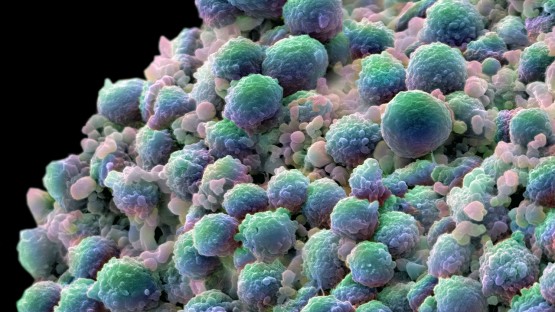
An experimental treatment using engineered silica nanoparticles has shown the ability to directly destroy prostate tumor cells while simultaneously awakening the body’s immune system against cancer, according to a new preclinical study. The approach led to complete remissions in aggressive tumors in mouse models, raising hopes for a new class of cancer therapies.
The particles, called Cornell Prime dots (C’ dots), are ultrasmall fluorescent core-shell silica nanoparticles originally developed for medical imaging. In the study published in Cancer Research, researchers found that the particles push prostate tumor cells into a self-destruct mode known as ferroptosis, where runaway oxidation destroys the cell membranes. At the same time, the particles transform the tumor’s immune microenvironment from “cold” to “hot,” converting inactive immune cells into active cancer fighters. This dual action makes tumors more vulnerable to existing immunotherapies.
When combined with an immune checkpoint blockade therapy, the C’ dots produced complete or near-complete remissions with indefinite survival in 4 out of 10 mice with aggressive prostate cancer. Adding a third treatment called CSF-1R blockade raised that rate to 5 out of 10 complete remissions. Importantly, the particles were targeted specifically to prostate cancer cells using a molecule that binds to the PSMA protein, and no signs of toxicity were seen in healthy tissues where the particles briefly accumulated, such as the spleen.
How the Particles Work and What Comes Next
The researchers believe the C’ dots may pick up positively charged iron ions in the bloodstream and transport them into tumor cells, catalyzing the oxidative damage that leads to ferroptosis. The particles also remodel immune cells including T cells and macrophages, shifting them from a suppressive state to one of robust antitumor activity. “We think there’s nothing else out there that has such a strong and durable tumor growth suppressing effect,” said study senior author Dr. Michelle Bradbury of Weill Cornell Medicine.
The team is now continuing to explore these silica particles as a new class of anticancer therapeutics that can simultaneously modulate inflammatory, immune and metabolic pathways. The ultimate goal is to evaluate their safety and efficacy in clinical trials, potentially offering a new treatment paradigm for prostate cancer, where durable responses to immunotherapy have historically been difficult to achieve.