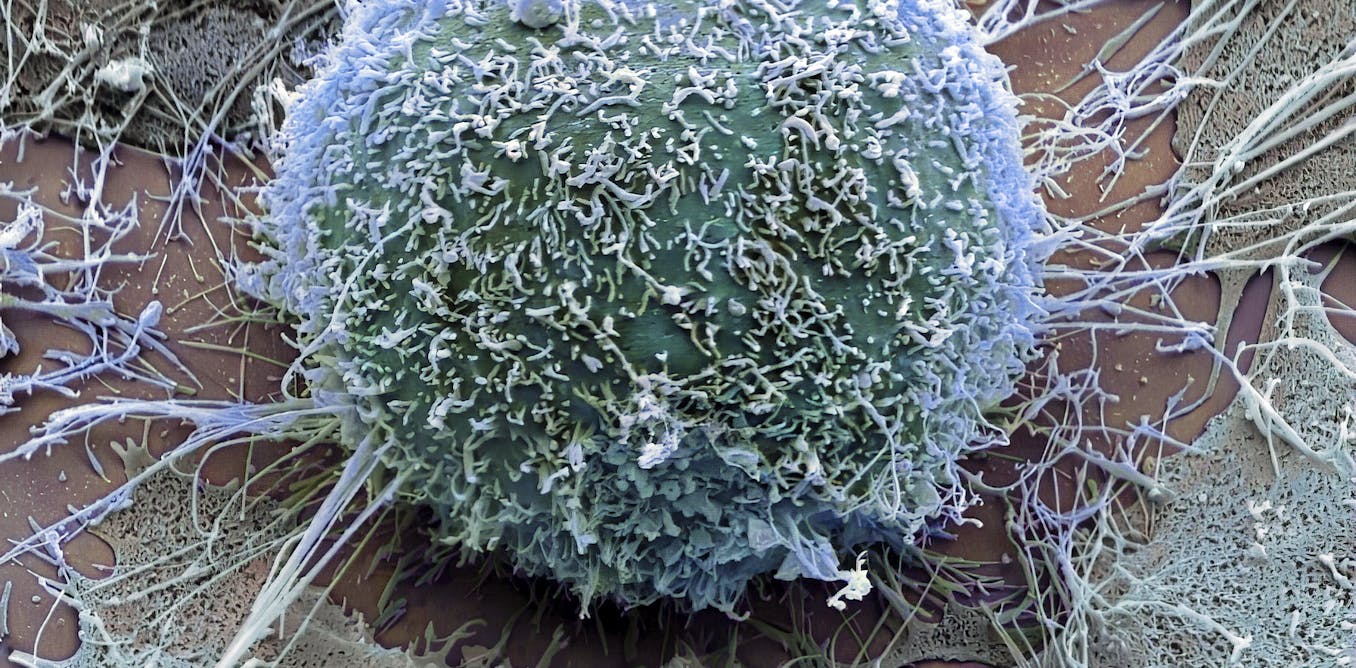
Researchers have uncovered the molecular mechanism that allows cancer to disguise itself from the immune system, a breakthrough that could lead to new vaccines and therapies. The discovery centers on a protein called Mucin-1 (MUC1), which normally acts as a protective shield on the surface of cells lining organs such as the breast, colon and lungs. In healthy tissue, MUC1 is coated with long, complex sugar chains that signal the immune system to respond to threats. But in cancer, this guardian turns traitor.
The team used a novel synthetic biology approach to recreate the transformation in a test tube, then applied computational chemistry to map exactly how the sugar coating changes. They found that in tumor cells, the enzymes responsible for building the sugar chains are relocated from the Golgi apparatus to the endoplasmic reticulum, a different part of the cell. This shift removes normal checks and balances, allowing the enzymes to attach shortened, altered sugars known as Tn and sialyl-Tn (sTn) antigens. These aberrant structures act as a cloak of invisibility, preventing immune detection and actively promoting tumor growth.
A key finding pinpointed a specific location on the MUC1 protein, called the T13 site, where cancer enzymes preferentially attach these altered sugars. This interaction drives a massive increase in the sTn antigen seen in malignant tumors. Because MUC1 is present in so many cancer types, the US National Cancer Institute has ranked it as the most accessible target for developing cancer treatments. Understanding the exact location and nature of these sugar changes provides the foundation for designing cancer vaccines, biomarkers and therapeutics.
Next Steps Toward Precision Medicine
The research is already moving beyond the test tube. The team is building a sophisticated systems biology computer model that connects the sugar coating changes on MUC1 to the behavior of immune cells. Early results show that when cancerous sugars interact with macrophages, a type of white blood cell, they trigger signals that tell the tumor to grow and spread. Scientists are now refining these details for different cancer types, comparing common forms of breast cancer with more aggressive, currently untreatable varieties to see if the sugar code differs between them.
By combining atomic-level data with computer models of the entire biological system, researchers hope to identify new drugs that can block these signals. The ultimate goal is precision medicine: treatments that strip away cancer’s sugar shield, allowing the patient’s own immune system to finally see and destroy the tumor. This South African-led work represents a major step toward decoding one of cancer’s most effective survival strategies and turning it into a vulnerability.