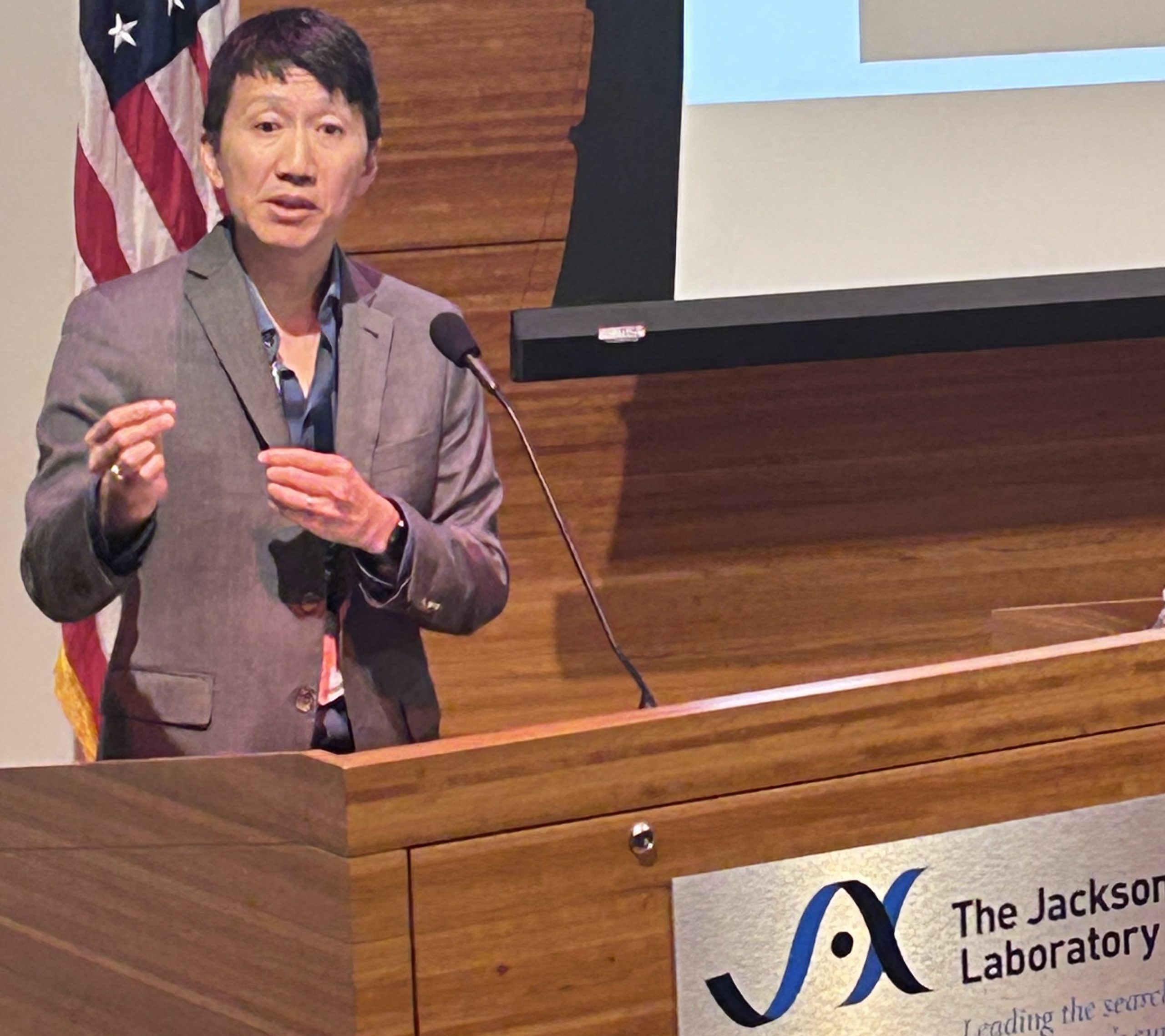
In a gathering that pulsed with optimism, over 235 researchers and bioscience leaders convened at The Jackson Laboratory for Genomic Medicine in Farmington this week. The Connecticut Rare Disease Forum served as a powerful testament to the accelerating pace of discovery. Dr. Lon Cardon, President and CEO of the host institution, set a tone of remarkable progress, contrasting the decades-long therapy development timelines of the past with a new reality. He shared that the journey from diagnosis to a potential treatment can now be measured in months, not years. This rapid evolution forms the backdrop for a new era of medicine, one where the very blueprint of life can be thoughtfully edited to heal.
The forum's keynote speaker, Dr. Timothy Yu, a neurologist and genetics researcher from Boston Children's Hospital and Harvard Medical School, illuminated the path forward. He detailed how tools born from the landmark Human Genome Project have led to an explosion in our understanding, with nearly 7,000 disease genes now identified. Yet, he noted, this scientific wealth has yielded fewer than 500 approved therapies, highlighting a critical gap between discovery and deliverable treatment. The past decade, however, has ushered in a transformative shift, moving the field from simply identifying genetic errors to directly crafting precise corrections for them.
Central to this shift are antisense oligonucleotide therapies, or ASOs, a class of bespoke medicines designed to intervene at the genetic level. These lab-made strands act as molecular patches, binding to RNA to block or correct faulty instructions before a harmful protein can ever be produced. Dr. Yu reported that 35 such trials, targeting diseases of the brain, spinal cord, liver, and eye, are already underway for 82 patients. This work is forging a new medical specialty he calls "interventional genetics," which ethically unites genetic diagnosis with the tools to directly treat the root cause of a patient's unique condition.
This move toward highly individualized care is now inspiring a parallel evolution in how these life-altering treatments are approved. Dr. Yu described innovative regulatory models being piloted, such as the United Kingdom's "do and tell" approach, where doctors act swiftly in a patient's interest and then provide comprehensive data for review. Encouragingly, he noted that the U.S. Food and Drug Administration has signaled openness to such adaptive pathways for bespoke therapies. The agency has indicated that after demonstrated success with several consecutive patients, it would consider granting broader market authorization, a significant step toward streamlining access.
The dialogue at the forum acknowledged current regulatory challenges while firmly focusing on a hopeful horizon. Dr. Yu framed the ultimate goal with a compelling analogy, suggesting that if society trusts surgeons to perform life-saving operations on infants, the same principled urgency should apply to what he terms "genetic surgery." The collective energy in Farmington was directed toward answering his central question: can we build the framework to safely deliver these custom genomic interventions? The resounding sentiment, echoed by the collaborative spirit of the event, was that science is steadily creating the tools, and now, the systems are beginning to adapt to ensure these tools reach the patients who need them most.