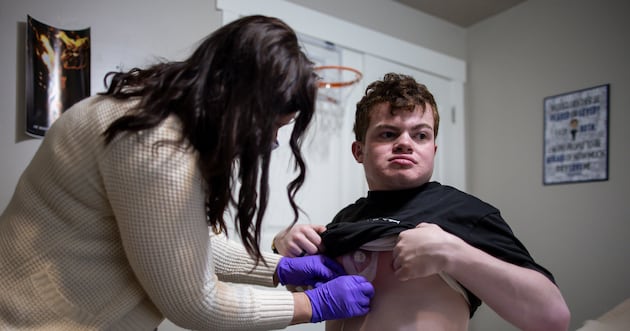
The story of the Thomas family in Utah paints a stark picture of both profound loss and hard-won hope, a duality familiar to thousands of families navigating rare diseases. Two brothers, Nathan and Easton, were both diagnosed with Hunter syndrome, a devastating genetic disorder where the body cannot properly break down cellular waste. For Nathan, the progression was relentless, stealing his abilities and ultimately his life at age twelve. For Easton, however, early intervention changed his trajectory. Enrolled in a clinical trial as a toddler for a therapy that could cross the blood-brain barrier, he avoided the worst neurological damage. Today, at twenty, he walks, talks, and attends an extended high school program, a testament to what timely treatment can achieve. His mother, Melissa, reflects on the chasm between her sons' experiences, a gap defined by the critical timing of medical science.
This week, the urgency of time is the driving force behind a gathering of families from across the nation. In a collective plea for swifter regulatory pathways, they are rallying at the FDA in an event dubbed the "March for Rare." Co-hosted by advocacy groups like the National MPS Society and Project Alive, the march highlights a painful reality for many rare disease communities. Promising therapies, particularly for conditions known as mucopolysaccharidoses (MPS), often remain in a state of regulatory limbo while diseases progress irreversibly. Organizers speak of the devastation of potentially losing a generation of children, their milestones and progress, as the approval process moves far slower than the diseases themselves. For parents, every day of delay can mean irreversible loss.
The central request from these families is for regulatory flexibility that matches the urgency of their children's conditions. They advocate for the acceptance of surrogate endpoints, like biomarkers, as evidence of a drug's promise, rather than waiting for perfect long-term outcomes that may never come in time. They point to pathways like a "plausible mechanism" approval, which could get potentially life-altering treatments to children faster to head off irreversible damage. Melissa Thomas articulates this desperate hope, wishing the FDA would recognize the terminal nature of diseases like Hunter syndrome and inject more urgency into the process. She questions how many more children will suffer or pass away unnecessarily due to the passage of time, even as care for these complex conditions remains extraordinarily costly for families and the healthcare system.
Stories like Easton's demonstrate the transformative power of access, while also underscoring the heartbreaking inequities of the current system. With Hunter syndrome now part of newborn screening in Utah, there is potential to identify and treat infants immediately, potentially preventing all damage. Yet the regulatory framework often locks families out. When clinical trials close, new patients cannot access these experimental therapies, and even those in successful trials can lose access if a different, perhaps less effective, treatment is approved later. This leaves families in an agonizing purgatory, watching promising science stall just out of reach.
Beyond the statistics of nearly 7,000 rare diseases affecting millions of Americans are individual stories of remarkable courage and the profound impact of treatment. Sharon King of North Carolina remembers her daughter Taylor, who had a form of Batten disease, as a bright light who learned braille and ran 5K races even as her disease advanced. King recalls attending a conference and seeing adults living with MPS conditions, their lives extended and enriched by clinical trials. That vision, she says, is the goal. It is a future where availability of a drug does more than treat a condition. It gives individuals and their families not only a better life, but the priceless gift of time, a future filled with potential rather than predetermined decline. The march this week is a step toward turning that vision into a reality for all.