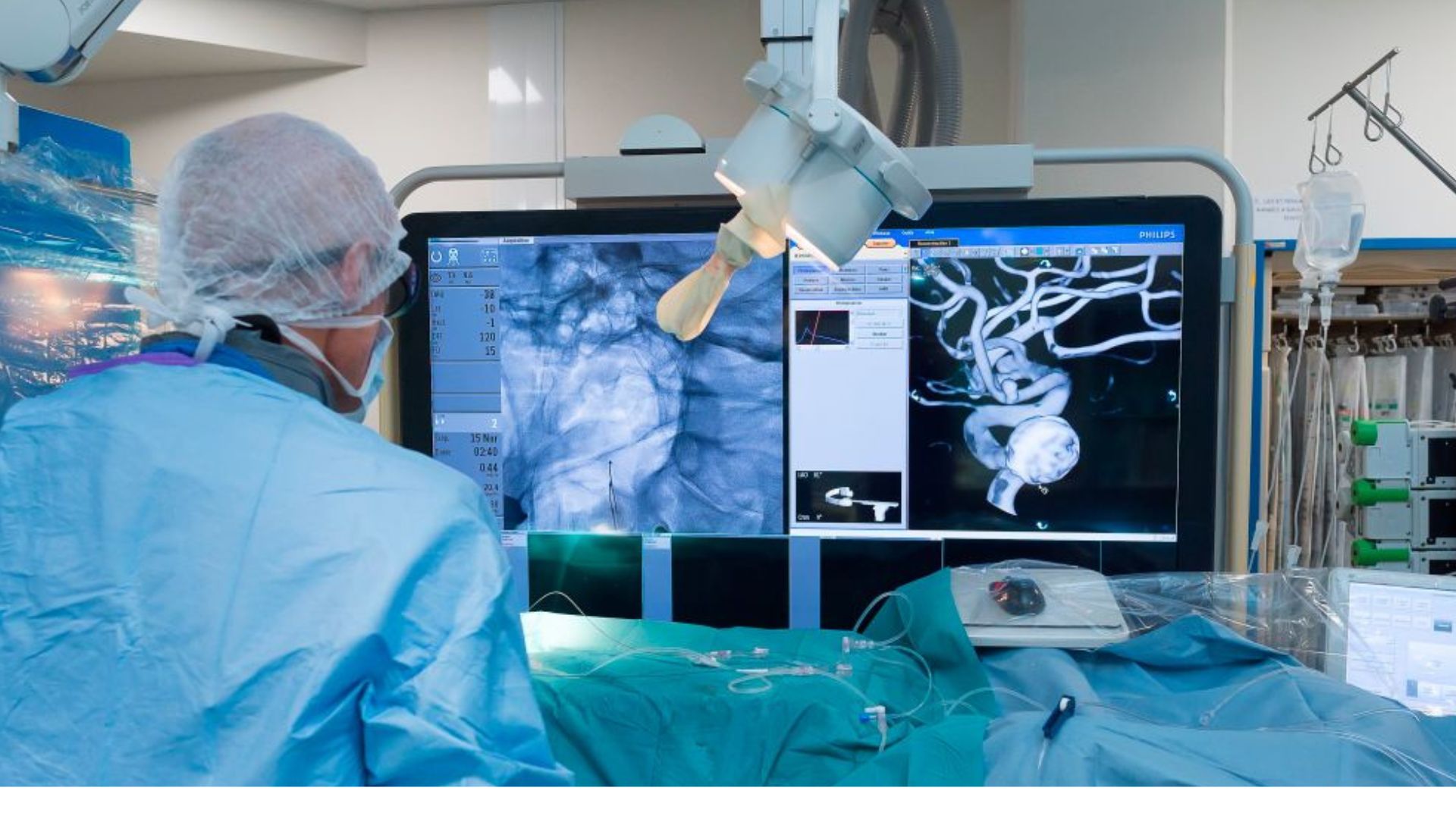
A new robotic system for performing delicate brain imaging procedures has demonstrated a significant reduction in surgical time while maintaining perfect success rates in its first clinical trial. The technology, which allows surgeons to operate remotely, marks a major step forward in automating complex cerebral angiography.
In a controlled study at Peking Union Medical College Hospital, the YDHB-NS01 robotic system was used to perform diagnostic cerebral angiography, a procedure where a catheter is guided from the thigh to the brain's blood vessels to image conditions like aneurysms. When compared to traditional manual methods, the robot-assisted procedures were completed 29% faster, reducing the average time from 38 minutes to 27 minutes. All 50 procedures in the trial, split evenly between robotic and manual groups, were completed with a 100% technical success rate.
The system addresses several long-standing challenges for neurosurgeons. Traditionally, the procedure is physically demanding, requiring doctors to manually steer a wire while wearing heavy radiation-shielding lead aprons in the angiography room, with performance susceptible to hand tremors. The robotic system allows the surgeon to operate from a separate, shielded console using high-precision controls with force feedback, eliminating direct radiation exposure and enhancing mechanical stability. "Preliminary clinical application shows that the YDHB-NS01 robot-assisted system is feasible for diagnostic cerebral angiography and shows early indications of safety and comparable procedural performance to conventional manual methods," the researchers noted.
Notably, the trial demonstrated that a surgeon with under three years of experience could achieve these results after only two training sessions with the robot. The study found no differences in critical safety metrics between the two groups, including patient radiation dose, contrast agent used, and fluoroscopy time. The robotic assistance produced high-quality imaging that met all diagnostic requirements.
Researchers characterize these findings as a promising first step. The lead surgeon, Dr. Zhao Yuanli, emphasized that while the initial results are positive, larger and multicenter controlled trials are essential to fully validate the robot's performance and safety across a broader range of clinical settings. If further studies confirm these early results, the technology could become a new standard, improving working conditions for surgeons and streamlining care for patients needing precise brain vascular imaging.