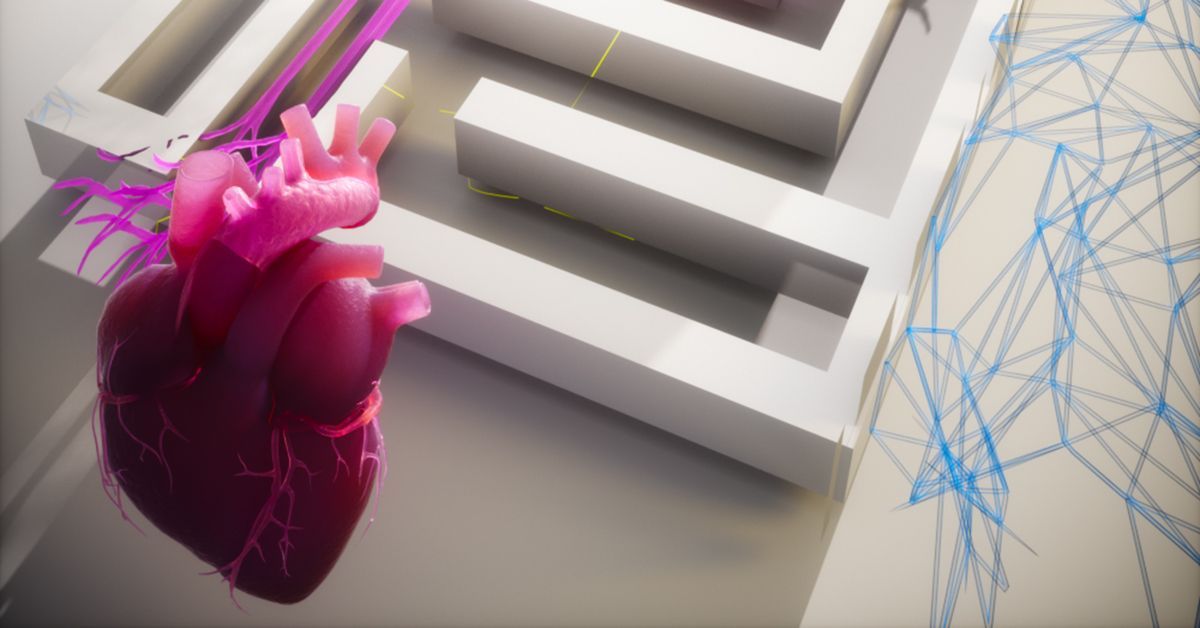
For decades, the medical world has understood a heart attack in starkly mechanical terms. A clogged artery, a blocked pipe, a heart starved of oxygen. This view has dictated treatments focused squarely on the cardiac muscle itself, through surgeries and medications aimed at restoring blood flow. Now, a groundbreaking study is revolutionizing this perspective, revealing that a heart attack is not an isolated event but a dramatic conversation involving the brain, the nervous system, and the immune system. This discovery paints a new, interconnected picture of the world's leading cause of death and opens a hopeful path toward entirely new kinds of therapies.
The research reveals that during a heart attack, sensory neurons act as urgent messengers, relaying news of the cardiac injury directly to the brain via the vagus nerve. Much like the eyes and ears send signals about the external world, these neurons provide the brain with a real-time cardiovascular status report. The brain, interpreting this distress signal as a severe injury, then activates a sweeping immune response. The problem, researchers found, is that this well-intentioned defense mechanism becomes overzealous. With no actual pathogen to fight, the immune system's aggressive response appears to worsen the damage to the heart tissue, inadvertently causing more harm in the aftermath of the initial attack.
In a series of experiments, scientists demonstrated the profound implications of this three-node loop connecting the heart, brain, and immune system. By strategically blocking the sensory and immune signals traveling between the heart and the brain, they were able to significantly reduce the injury following a heart attack in models. As one researcher explained, if the heart attack is the epicenter, stopping this cross-talk prevented the damage from spreading. This critical finding suggests that future treatments could protect the heart not just by fixing a plumbing issue, but by calming a misdirected immune reaction triggered by the brain.
This transformative understanding was made possible by a collaborative effort that bridged the traditional silos of neuroscience, cardiology, and immunology. Using a sophisticated array of techniques from echocardiography to advanced microscopy, the team meticulously mapped the hidden pathways of this dialogue. The resulting maps offer a new blueprint for intervention. Current lead author Vineet Augustine notes that while today's treatments are necessarily invasive, this research points toward the possibility of manipulating the immune system to drive healing. The work fundamentally shifts the goal from merely repairing the heart to intelligently modulating the body's own systemic response to save it.
Ongoing research continues to unravel the precise mechanisms of this three-node connection, exploring how best to intervene in this conversation for therapeutic benefit. The study stands as a powerful testament to the progress that emerges when scientific disciplines converge. By looking beyond the heart alone, scientists have uncovered a complex narrative of inter-system communication that worsens cardiac damage. In doing so, they have illuminated a promising frontier for developing gentler, more effective treatments that could one day alter the devastating trajectory of heart attacks for millions.