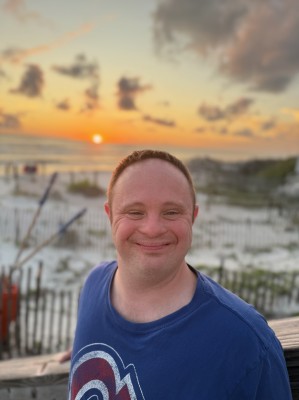
Evan Dewey, a 42-year-old man from Atlanta with Down syndrome, brings his characteristic friendliness to a groundbreaking medical mission. He is the pioneering participant in Vanderbilt Health's segment of the global ABATE study, which is testing an innovative immunotherapy vaccine designed to prevent Alzheimer's disease. For Evan, the journey is part of the adventure, as he and his father, Brian, travel by bus to Nashville, where he has forged warm friendships with the nursing and research staff. At the Vanderbilt Center for Cognitive Medicine, he receives infusions that may contain either a placebo or the experimental treatment, a vaccine that teaches the body to create antibodies against the amyloid plaques strongly linked to Alzheimer's.
This research represents a significant and hopeful shift in scientific focus. While Alzheimer's trials have a long history, targeted studies for the Down syndrome community are a newer, critical frontier. Individuals with Down syndrome carry a third copy of chromosome 21, which houses the amyloid precursor protein gene. This leads to a lifelong increased production of amyloid in the brain, putting them at markedly elevated risk. By their forties, a substantial proportion already have elevated amyloid, the key biological risk factor for the disease. The ABATE study aims to see if reducing this amyloid buildup can ultimately prevent Alzheimer's development in this high-risk population.
Evan's involvement is deeply personal and informed. His mother, Jane, a former pediatric occupational therapist who closely follows the Down syndrome community, proactively sought out the trial. She recognized the profound genetic link and felt a strong urgency for research that directly addresses it. For Jane, the study represents a tangible hope for delaying the onset of plaques, potentially preserving quality of life. Evan himself is a willing and experienced volunteer, having participated in other clinical trials, and he approaches this work with a sense of purpose, viewing it as his job. His family supported his choice to participate, and the extensive screening process, including PET scans and cognitive tests, did not deter his enthusiastic spirit.
Beyond the profound potential scientific impact, the study has woven unexpected personal benefits into the fabric of the Dewey family's life. Brian, Evan's father, notes that their regular trips to Vanderbilt have become cherished father-son time, a shared adventure that strengthens their bond. This aligns beautifully with themes of community and connection, countering loneliness. Evan, with his knack for making friends from Atlanta to Nashville, embodies this connected spirit. The research team, led by Dr. Jo Ellen Wilson, expresses immense gratitude for participants like Evan and their families, who trust in this vital work. They are driven by a vision of a future where Alzheimer's does not shorten or diminish the lives of people with Down syndrome, allowing everyone to live life to the fullest.