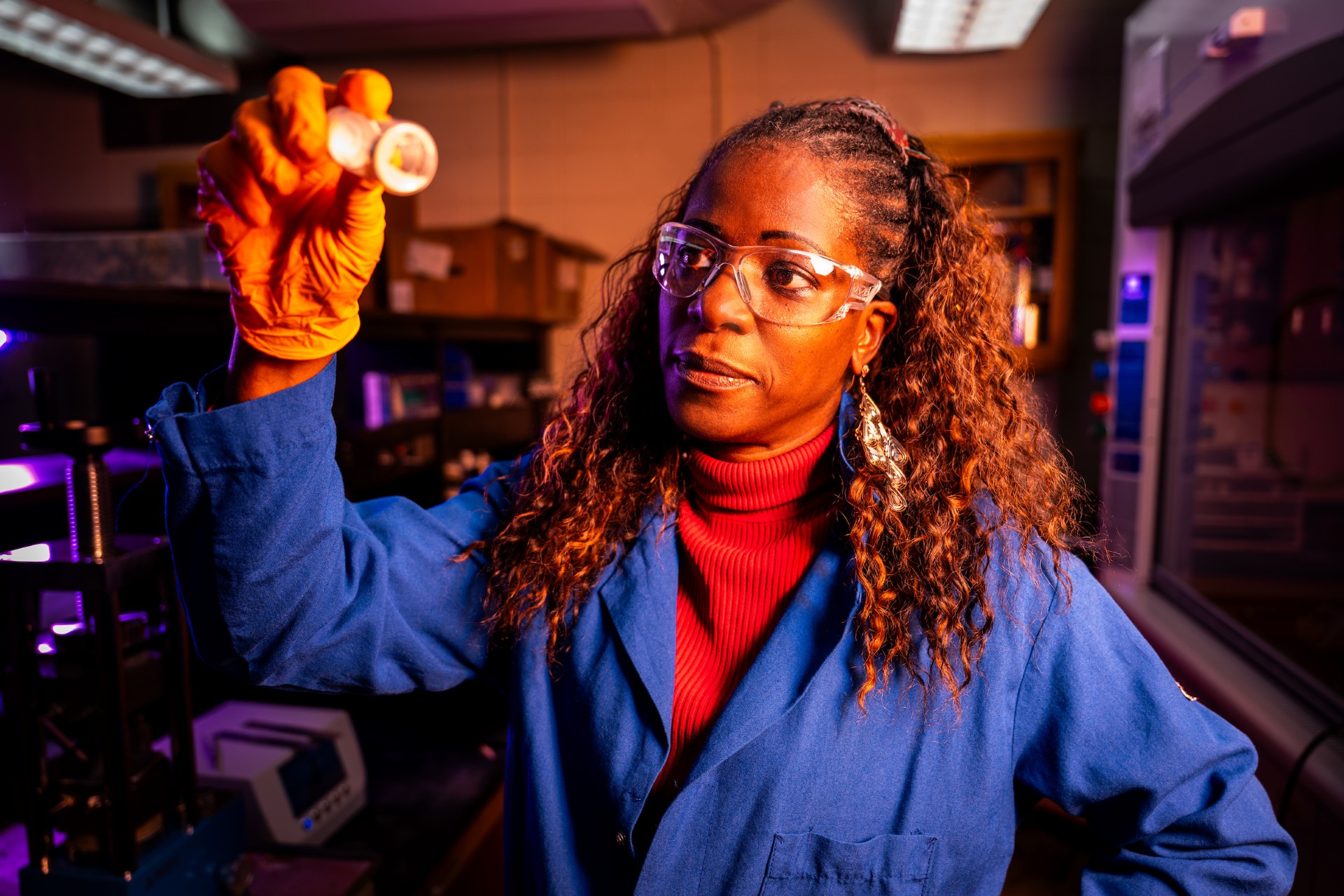
A chemist at Mississippi State University has received a major national honor for developing a dye that could help surgeons see and remove cancerous tissue with greater precision. The technology uses shortwave infrared light to illuminate tumors deep inside the body, offering a clearer picture of where cancer ends and healthy tissue begins.
Colleen Scott, an associate professor in the university’s Department of Chemistry, has been selected for the 2026 American Innovator Award from the Bayh-Dole Coalition. The honor recognizes federally funded research that leads to real-world impact. Scott’s patented work focuses on a shortwave infrared dye that enables safe, high-resolution deep tissue imaging. Unlike traditional methods, the dye operates at lower energy levels and is designed to selectively target cancer cells, allowing clinicians to more clearly identify tumor boundaries during surgery.
The technology could give surgeons a powerful new tool. By making cancer cells glow under infrared light, the dye may help doctors remove tumors more completely while sparing healthy tissue. This approach could reduce the need for repeat surgeries and improve long-term outcomes for patients. Scott’s research has already earned multiple distinctions, including a National Science Foundation CAREER Award in 2020, a $675,000 grant for early career faculty, and recognition at the 2022 TechConnect World Innovation Conference for her work on NIR-II dye imaging.
From Lab to Life Saving Tools
The award also highlights the broader mission of the Bayh-Dole Act, a 1980 law that allows universities and small businesses to own and license inventions arising from federal research. Scott’s work is an example of how that system can turn government funded discoveries into real technologies that improve patient care. Joseph P. Allen, executive director of the Bayh-Dole Coalition, said Scott’s story shows how federally supported research can be translated into tools that “improve patient outcomes and save lives.”
Beyond the lab, Scott runs a program called “Science with Dr. Scott” that brings hands on learning to K-12 students. She also mentors undergraduate and graduate researchers at Mississippi State. “This award is a tremendous honor and a validation of the hard work of my team and students,” Scott said. “I hope it inspires the next generation of scientists and provides more opportunities to advance research that improves human health, technology and everyday life.”
The American Innovator Award recipients will be honored at a congressional briefing and advocacy conference in Washington, D.C., on June 3-4. Scott’s dye technology continues to move toward clinical use, offering a hopeful glimpse of a future where surgeons can see cancer more clearly and remove it more safely.