A new approach to testing cancer drugs is dramatically speeding up the development of new therapies for multiple myeloma, offering patients faster access to potentially life-saving treatments. This acceleration is driven by a precision medicine technique that measures minute traces of cancer, which has now been endorsed by the U.S. Food and Drug Administration in its latest guidance for clinical trials.
The technique, known as minimal residual disease (MRD) testing, measures cancer biomarkers to see how deeply a therapy has suppressed the disease. Pioneered by Dr. C. Ola Landgren, director of the Sylvester Myeloma Institute, this method allows researchers to determine a drug's effectiveness much earlier in the trial process. Based on this work, the FDA now supports using MRD as an early endpoint for drug approval. "This means that new drugs can be approved within a few years, instead of waiting 10 or 15 years," Dr. Landgren said. The impact is direct: patients gain access to new therapies more rapidly, and the entire drug development pipeline is expected to move "even faster."
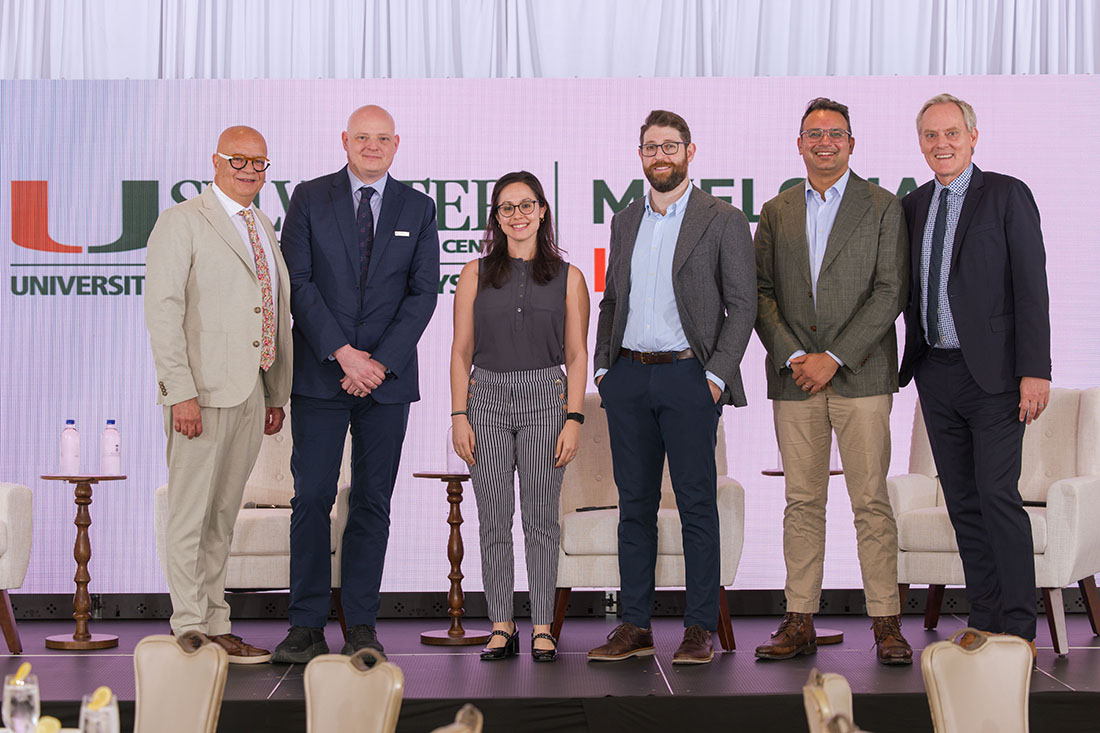
Beyond accelerating drug approvals, MRD testing is also used to personalize treatment for current patients. Clinicians can adjust therapy intensity based on a patient's MRD status, potentially reducing side effects for those with no detectable disease. This focus on precision medicine is a cornerstone of the institute's work. Dr. Benjamin Diamond highlighted a genomics-based prediction model he developed to understand each patient's unique disease profile. "There truly are multiple myelomas, and so we don't want to treat every patient the exact same way," he said.
The institute is also working to improve the patient experience directly. Dr. Gil Hevroni discussed a clinical trial for a new bone-implanted port, similar to a chemotherapy port, designed to make frequent bone marrow biopsies less burdensome. Furthermore, research is expanding into areas like diet and early intervention. Dr. Abhi Pandey's team is launching a trial to study how diet and fasting might influence myeloma and treatment side effects. For patients with precursor conditions, Dr. David Coffey is identifying those at highest risk, while Dr. Landgren's early intervention trial has shown remarkable preliminary results. "In 100% of the patients we have treated, we cannot find any disease after six or eight months of therapy," Landgren reported.
With over 200,000 Americans living with multiple myeloma, these combined efforts in faster drug development, personalized treatment, and quality-of-life research represent a multi-front advance. The integration of cutting-edge science with direct patient care aims not just to manage the blood cancer, but to build the foundational knowledge necessary to one day cure it. "We are here to win the Stanley Cup of myeloma research and clinical care," Dr. Landgren said.